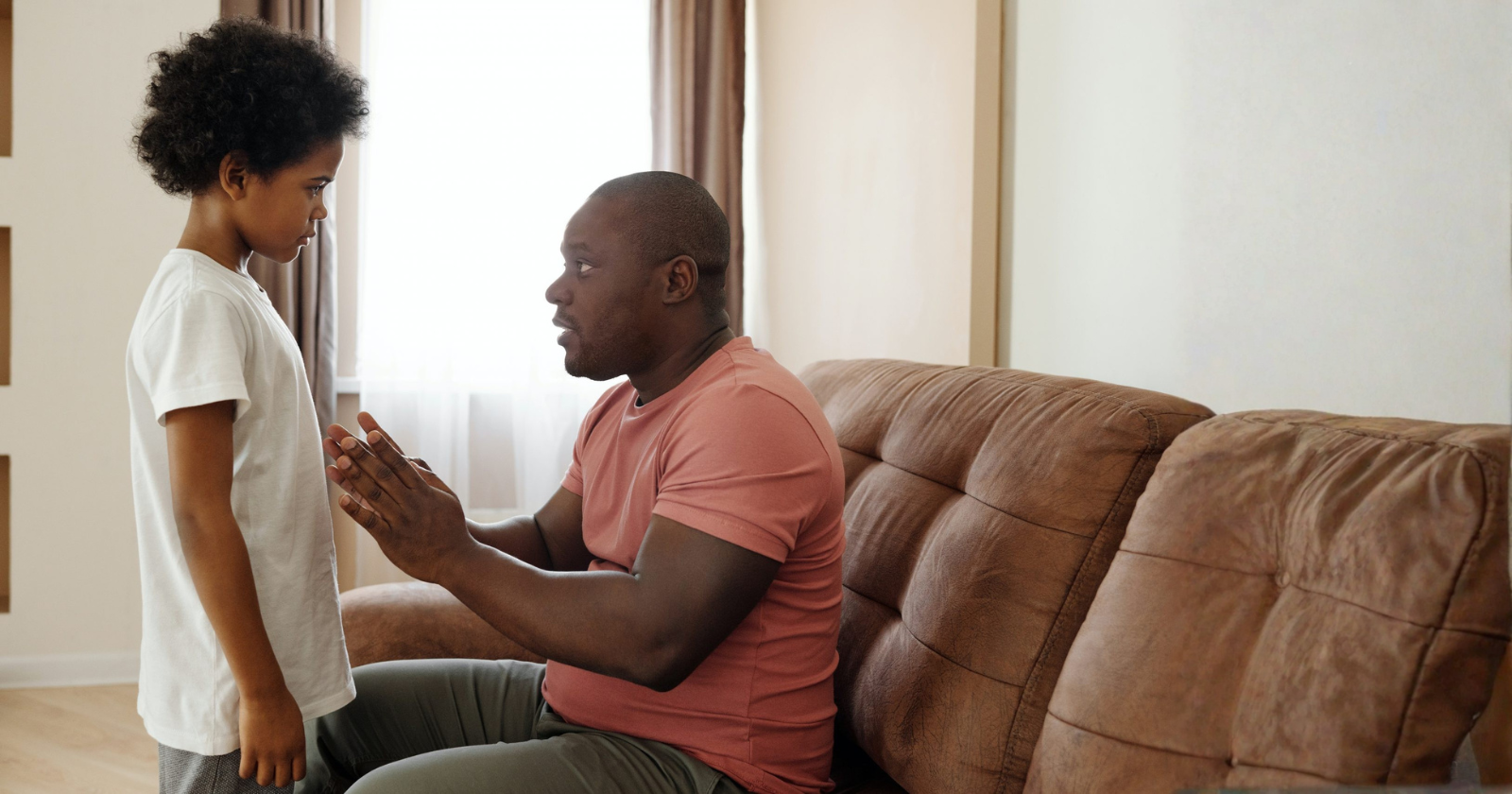
Picture this: I’m at a family barbecue last summer, and my cousin’s seven-year-old daughter runs up to show her mom a drawing she made.
“That’s nice, honey, but the sun doesn’t have a face,” her mom says absently while scrolling through her phone. The little girl’s shoulders drop, and she quietly walks away. Two hours later, when I ask her about her drawing, she says, “Mom thinks I’m bad at art.”
Her mother doesn’t even remember the comment. But that little girl? She’ll probably carry those words for years.
We’ve all been there. Those throwaway comments our parents made that somehow stuck with us decades later. Maybe you still remember when your dad said you were “too sensitive” or when your mom mentioned you were “the smart one, not the pretty one” in the family.
These moments that parents forget within minutes can shape how kids see themselves for a lifetime.
According to child development experts, children’s brains are like recording devices, especially when it comes to comments from their parents.
They’re constantly trying to figure out who they are and where they fit in the world, and every word from mom or dad becomes a piece of that puzzle.
Today, we’re diving into nine seemingly small comments that psychology tells us kids hold onto long after parents have forgotten them.
If you’re a parent, this might make you think twice before speaking. And if you’re still carrying some of these comments from your own childhood? Well, you’re definitely not alone.
1) “Why can’t you be more like your sibling?”
This one hits hard because it creates a comparison that can last a lifetime. Dr. Jeffrey Bernstein, a child psychologist, notes that sibling comparisons can damage self-esteem and create lasting rivalry between brothers and sisters.
When I was growing up, my mother would often compare my organizational skills to my older brother’s.
She probably thought she was motivating me, but all I heard was that I wasn’t good enough as I was. Even now, in my thirties, I sometimes catch myself trying to prove I’m just as capable as he is.
Kids internalize these comparisons as fundamental truths about themselves. They start believing they’re inherently lacking something their sibling has, which can affect their confidence well into adulthood.
2) “You’re being too sensitive”
Ever wonder why so many adults struggle to express their emotions healthily? This comment might be part of the reason.
When parents dismiss children’s feelings as “too sensitive,” they’re essentially teaching them that their emotions are wrong or excessive.
Research from developmental psychology shows that emotional invalidation in childhood can lead to difficulty regulating emotions in adulthood.
A friend recently told me she still struggles to cry in front of others because her dad always told her she was “too emotional.” She’s 35 years old, and those words from when she was eight still echo in her mind.
3) “I’m disappointed in you”
While it might seem like a gentler alternative to anger, disappointment can actually cut deeper. Child psychologists explain that kids often interpret parental disappointment as a withdrawal of love and acceptance.
The weight of disappointing a parent can become a driving force in a child’s life, sometimes leading to perfectionism or chronic people-pleasing behaviors.
They grow up constantly trying to avoid that feeling of letting someone down, even in situations where it’s impossible to please everyone.
4) “You always…” or “You never…”
These absolute statements become self-fulfilling prophecies.
When a parent says “You never listen” or “You always make a mess,” children start to see these behaviors as unchangeable parts of their identity.
Psychological research on labeling theory shows that children often live up to (or down to) the labels placed on them. That kid who “never listens” might stop trying to pay attention because, well, that’s just who they are, right?
5) “That’s not important”
When kids share something they’re excited about and hear this response, it teaches them their interests don’t matter.
Whether it’s a video game achievement, a friendship drama, or a new hobby, dismissing what matters to them can make children feel invisible.
I remember showing my mom a story I wrote when I was ten, and she glanced at it briefly before saying we had “real things” to worry about. My mother, a guidance counselor who ironically spent her days listening to other people’s kids, didn’t realize how much that stung.
It took me years to share my writing with anyone again.
6) “Stop crying or I’ll give you something to cry about”
This classic line might stop tears in the moment, but it teaches kids that expressing sadness or frustration will be met with punishment.
Psychology research consistently shows that children who aren’t allowed to express negative emotions often struggle with emotional regulation as adults.
They learn to stuff down their feelings until they explode inappropriately or develop anxiety from constantly suppressing their emotions.
7) “You’re so smart/pretty/talented”
Wait, compliments are bad? Not exactly, but when parents only praise inherent traits rather than effort, it can create problems.
Stanford psychologist Carol Dweck’s research on growth mindset shows that kids praised for being “smart” often become afraid to take risks that might prove otherwise.
These children might avoid challenges, fearing that failure will reveal they’re not as smart as everyone thinks. They carry this fear of not living up to their label throughout their lives.
8) “Money doesn’t grow on trees”
While teaching financial responsibility is important, this phrase often creates anxiety around money that persists into adulthood. Kids might internalize a scarcity mindset, feeling guilty about spending money even when they can afford things.
They grow up with complicated relationships with money, sometimes hoarding it unnecessarily or feeling intense guilt over small purchases, even when financially stable.
9) “Because I said so”
This conversation-ender might work in the moment, but it teaches kids their questions and need for understanding don’t matter.
Children who frequently hear this often struggle with authority later in life, either becoming overly compliant or unnecessarily rebellious.
They never learn how to think critically about rules and boundaries, which can affect their decision-making abilities as adults.
Final thoughts
Here’s the thing: No parent is perfect, and we all say things we don’t mean or don’t think through. The point isn’t to make parents paranoid about every word they say. Instead, it’s about being mindful of the lasting impact our words can have.
If you’re a parent reading this, remember that kids are always listening, even when they seem distracted.
And if you’re someone still carrying these comments from your childhood, know that recognizing their impact is the first step in letting them go.
Those small moments might feel insignificant to adults, but to kids trying to understand themselves and their place in the world, every word matters.
The good news? Positive comments stick just as strongly. So maybe it’s time we all chose our words a little more carefully.