No Result
View All Result
  • Login
Monday, June 22, 2026
theadvisertimes.com
  • Home
  • Business
  • Financial Planning
  • Personal Finance
  • Investing
  • Money
  • Economy
  • Markets
  • Stocks
  • Trading
  • Home
  • Business
  • Financial Planning
  • Personal Finance
  • Investing
  • Money
  • Economy
  • Markets
  • Stocks
  • Trading
No Result
View All Result
theadvisertimes.com
No Result
View All Result
Home Startups

Psychology suggests that people who fear AI are often not only afraid of the technology itself — they’re afraid of what it threatens to erase: the status, competence, identity, and sense of usefulness they spent years building.

by theadvisertimes.com
2 hours ago
in Startups
Reading Time: 4 mins read
A A
0
Psychology suggests that people who fear AI are often not only afraid of the technology itself — they’re afraid of what it threatens to erase: the status, competence, identity, and sense of usefulness they spent years building.
Share on FacebookShare on TwitterShare on LInkedIn


In late 2024, the Pew Research Center surveyed more than 5,000 employed Americans and found that 52 per cent were worried about how AI might be used in their workplace. Roughly a third expected fewer job opportunities for themselves over the long run. Worry, in that data, clearly outweighed excitement.

Most coverage takes a number like that and runs it straight into the obvious story: people are afraid the machines will take their jobs. The fear is real, and the numbers behind it are not small. But it is worth pulling apart two worries that usually travel together, because the louder one tends to hide the deeper one.

The first is about income. The second is about everything else a job quietly carries — the standing it confers, the skill it took years to build, the sense of being good at something, the feeling of being needed. One is a worry about a salary. The other is a worry about a self.

The fear is real, and widespread

None of that worry is irrational. The economic risk is genuine, the pace is unusual, and a worker does not need a grand theory to notice that a tool doing part of their job cheaply is not obviously good news for them. Any honest discussion has to begin by granting that the fear is reasonable on its own terms.

But the unease is not only about pay packets.

Why a job is never only a job

One of the clearest accounts of this comes from the social psychologist Marie Jahoda, whose mid-twentieth-century work on unemployment has aged remarkably well. Jahoda argued that paid work supplies far more than money: it gives people a structure to the day, contact with others beyond the family, a sense of shared purpose, regular activity, and — most relevant here — status and identity. Her central point was that losing work damages wellbeing beyond what the drop in income alone can explain. People out of work, in her account, tend to lose their sense of time, their self-respect, and their place in things. The pay packet was only one of the supports a job had been quietly holding up. If that is right, then a technology that threatens the work threatens those other functions with it. Think of the senior analyst who has spent twenty years learning to read a balance sheet the way a sommelier reads a wine list, now watching a chatbot produce a passable version of that judgement in nine seconds. The fear is not only that the paycheque goes. It is that the scaffolding goes with it.

Competence is a need, not a vanity

A second piece of well-established psychology fits the same shape. In self-determination theory, developed over decades by Edward Deci and Richard Ryan, competence is one of three basic psychological needs, alongside autonomy and a sense of connection to others. People are not only chasing outcomes; they need to feel effective at things that matter to them.

When that need is frustrated, the theory holds, the result is a felt sense of ineffectiveness that wears on wellbeing. So the prospect of a system that performs, in seconds, a task you spent a decade learning to do well is not a trivial bruise to the ego. It presses on something the research treats as a real human need.

This is what the word “useless” is usually pointing at. When people say they are frightened of being made useless, they are not only talking about employability. They are describing the loss of a feeling that carries its own weight.

What the “just reskill” answer misses

This is where the workplace conversation tends to go wrong. The standard reassurance — offered by companies and commentators alike — is that AI will not replace people but augment them, and that anyone worried simply needs to reskill.

As career advice, that is often sound. As an answer to the fear, it frequently misses the mark. If part of what someone values is the competence and standing they have already built, then being told to set that aside and become a beginner again is not a comfort. It is a fair description of the loss they were afraid of in the first place.

It also explains a pattern that is easy to misread inside organisations. When experienced staff resist a new AI tool, the temptation is to file it under fear of change, or plain stubbornness. Sometimes that is all it is. More often it is something more specific and more defensible: a person protecting an identity and a hard-won expertise that the tool, however useful, quietly discounts. Worth noticing before reaching for the word Luddite.

The harder thing to say

So here is the harder thing to say. The fear is legitimate, and the “just reskill” answer is glib — but neither of those facts entitles anyone to a permanent right to the work they used to do. A self built almost entirely on a single professional competence was always a fragile self, and the arrival of capable machines is exposing that fragility rather than creating it.

Organisations that pretend otherwise, soothing their senior staff with vague reassurances, do them no favours. The kinder move is to name what is actually being lost, help people grieve the specific competence rather than the abstract role, and then push on. Treating fear of AI as a failure of nerve misreads it. Treating it as a veto misreads it just as badly.

What it deserves is honesty, not accommodation.



Source link

Tags: afraidBuildingCompetenceErasefearidentitypeoplePsychologysensespentstatusSuggestsTechnologytheyreThreatensUsefulnessYears
ShareTweetShare
Previous Post

Join the 4 a.m. Club, Get Ahead of the Market

Next Post

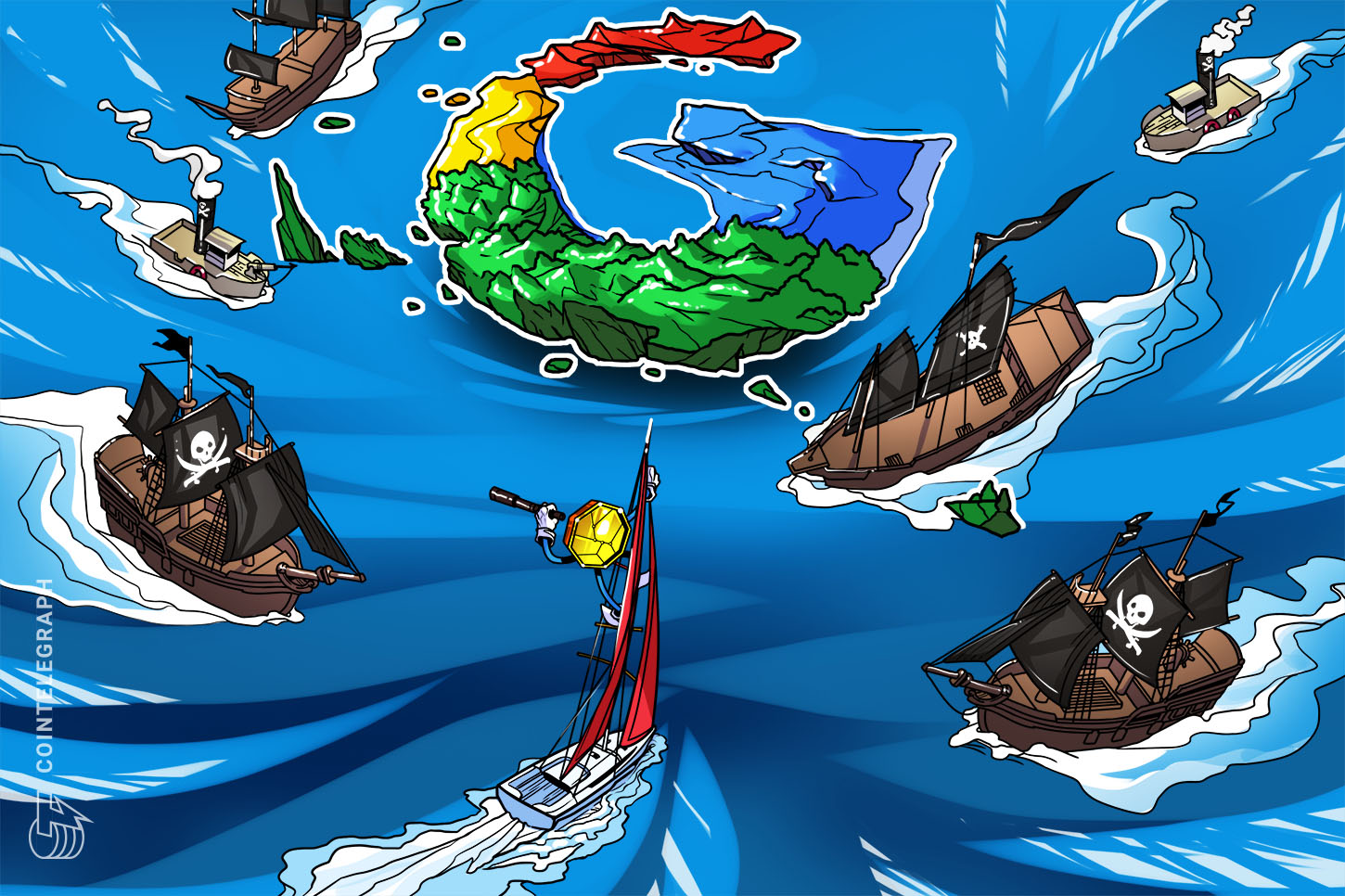
Why Google search can be a crypto wallet risk

Related Posts

The Weekly Notable Startup Funding Report: 6/22/26 – AlleyWatch

The Weekly Notable Startup Funding Report: 6/22/26 – AlleyWatch

by theadvisertimes.com
June 21, 2026
0

The Weekly Notable Startup Funding Report takes us on a trip across various ecosystems in the US, highlighting some of...

McKinsey’s 2025 global AI survey: 88% of organizations now use AI in at least one function, up from 78% — but most are still stuck in pilot mode, and only a minority can point to any real impact on profit

McKinsey’s 2025 global AI survey: 88% of organizations now use AI in at least one function, up from 78% — but most are still stuck in pilot mode, and only a minority can point to any real impact on profit

by theadvisertimes.com
June 21, 2026
0

Two numbers from McKinsey’s 2025 survey sit awkwardly next to each other. The first is 88 percent, the share of...

The oldest known written customer complaint is a 3,750-year-old clay tablet from ancient Ur, where a furious customer named Nanni accused the merchant Ea-nasir of delivering sub-standard copper — proof that bad reviews are almost as old as writing itself

The oldest known written customer complaint is a 3,750-year-old clay tablet from ancient Ur, where a furious customer named Nanni accused the merchant Ea-nasir of delivering sub-standard copper — proof that bad reviews are almost as old as writing itself

by theadvisertimes.com
June 20, 2026
0

In the British Museum’s Mesopotamian collection sits a palm-sized rectangle of baked clay, catalogued as UET V 81. It is...

I asked ChatGPT why reaching every goal still leaves me flat. The answer wasn’t the one I was expecting.

I asked ChatGPT why reaching every goal still leaves me flat. The answer wasn’t the one I was expecting.

by theadvisertimes.com
June 20, 2026
0

I typed it out plainly: “Based on everything you know about me, why does reaching my goals still leave me...

We treat the eight-hour day as an acceptable day’s work, but many celebrated figures did their best thinking in just four or five hours a day — and that deliberate rest may have been key

We treat the eight-hour day as an acceptable day’s work, but many celebrated figures did their best thinking in just four or five hours a day — and that deliberate rest may have been key

by theadvisertimes.com
June 20, 2026
0

Sit down to do real work, the kind that asks something of your brain, and notice how long you can...

Juggling several tasks at once feels efficient, but researchers have found that each switch quietly costs time and accuracy — via hidden mental stages of shifting goals and reloading rules that compound

Juggling several tasks at once feels efficient, but researchers have found that each switch quietly costs time and accuracy — via hidden mental stages of shifting goals and reloading rules that compound

by theadvisertimes.com
June 19, 2026
0

Here’s how many of my mornings go. I sit down to write, open the research tab, and start reading for...

Next Post
Why Google search can be a crypto wallet risk

Why Google search can be a crypto wallet risk

Apollo warns Nasdaq volatility points to tech market fragility

Apollo warns Nasdaq volatility points to tech market fragility

  • Trending
  • Comments
  • Latest
Should You Offer a Concession to Get Your Apartment Leased Faster?

Should You Offer a Concession to Get Your Apartment Leased Faster?

June 15, 2026
6 Hotels Where Chase’s Points Boost Yields 2.5x

6 Hotels Where Chase’s Points Boost Yields 2.5x

May 22, 2026
Understanding risk remains a major investor blind spot: TIAA Institute

Understanding risk remains a major investor blind spot: TIAA Institute

June 5, 2026
Anthropic’s confidential S-1 signals summer AI IPO race could heat up fast

Anthropic’s confidential S-1 signals summer AI IPO race could heat up fast

June 2, 2026
Memorial Day 2026: Take Advantage of Food Freebies, Deals

Memorial Day 2026: Take Advantage of Food Freebies, Deals

May 23, 2026
9 Best Cheap Cell Phone Plans That Will Save You Money

9 Best Cheap Cell Phone Plans That Will Save You Money

June 3, 2026
NSE signs MoU with Bharat Metal Exchange to boost non-ferrous metal derivatives market

NSE signs MoU with Bharat Metal Exchange to boost non-ferrous metal derivatives market

0
Can a Phone Be a Cow? (with Philip Auerswald)

Can a Phone Be a Cow? (with Philip Auerswald)

0
Join the 4 a.m. Club, Get Ahead of the Market

Join the 4 a.m. Club, Get Ahead of the Market

0
Why Google search can be a crypto wallet risk

Why Google search can be a crypto wallet risk

0
15 Certificate Programs That Lead to High-Paying Jobs in Under a Year

15 Certificate Programs That Lead to High-Paying Jobs in Under a Year

0
Psychology suggests that people who fear AI are often not only afraid of the technology itself — they’re afraid of what it threatens to erase: the status, competence, identity, and sense of usefulness they spent years building.

Psychology suggests that people who fear AI are often not only afraid of the technology itself — they’re afraid of what it threatens to erase: the status, competence, identity, and sense of usefulness they spent years building.

0
Apollo warns Nasdaq volatility points to tech market fragility

Apollo warns Nasdaq volatility points to tech market fragility

June 22, 2026
Why Google search can be a crypto wallet risk

Why Google search can be a crypto wallet risk

June 22, 2026
Psychology suggests that people who fear AI are often not only afraid of the technology itself — they’re afraid of what it threatens to erase: the status, competence, identity, and sense of usefulness they spent years building.

Psychology suggests that people who fear AI are often not only afraid of the technology itself — they’re afraid of what it threatens to erase: the status, competence, identity, and sense of usefulness they spent years building.

June 22, 2026
Join the 4 a.m. Club, Get Ahead of the Market

Join the 4 a.m. Club, Get Ahead of the Market

June 22, 2026
Alan Greenspan dies at 100. As Fed chair, he was the ‘Oracle’ but admitted a mistake on bank rules

Alan Greenspan dies at 100. As Fed chair, he was the ‘Oracle’ but admitted a mistake on bank rules

June 22, 2026
Amdocs slumps, plagued by slow growth and AI

Amdocs slumps, plagued by slow growth and AI

June 22, 2026
theadvisertimes.com

Get the latest news and follow the coverage of Business & Financial News, Stock Market Updates, Analysis, and more from the trusted sources.

CATEGORIES

  • Business
  • Cryptocurrency
  • Economy
  • Financial Planning
  • Investing
  • Market Analysis
  • Markets
  • Money
  • Personal Finance
  • Startups
  • Stock Market
  • Trading

LATEST UPDATES

  • Apollo warns Nasdaq volatility points to tech market fragility
  • Why Google search can be a crypto wallet risk
  • Psychology suggests that people who fear AI are often not only afraid of the technology itself — they’re afraid of what it threatens to erase: the status, competence, identity, and sense of usefulness they spent years building.
  • Our Great Privacy Policy
  • Terms of Use, Legal Notices & Disclosures
  • About Us
  • Contact Us

© Copyright 2024 All Rights Reserved
See articles for original source and related links to external sites.

Welcome Back!

Login to your account below

Forgotten Password?

Retrieve your password

Please enter your username or email address to reset your password.

Log In
No Result
View All Result
  • Home
  • Business
  • Financial Planning
  • Personal Finance
  • Investing
  • Money
  • Economy
  • Markets
  • Stocks
  • Trading

© Copyright 2024 All Rights Reserved
See articles for original source and related links to external sites.