
She already knew you couldn’t eat walnuts before you finished reading the menu. She remembered that your daughter’s name was Mia, that you preferred window seats, that you got anxious when people ran late. You marvelled at her memory. You called it a gift.
Most people interpret this kind of attentiveness as a personality trait, something genetic, or maybe just good manners drilled in early. The conventional wisdom says these are the naturally caring people, the ones who drew the lucky card for empathy and emotional intelligence.
But that reading misses something important. What looks like a gift is often a skill that was built under pressure. The people who track your preferences with uncanny precision frequently learned to do so because, as children, failing to notice a subtle shift in someone’s mood carried real consequences.
The Survival Brain Never Fully Clocks Off
Julian Ford and his colleagues at the University of Connecticut have spent years studying what happens to the developing brain when a child faces ongoing adversity. Ford describes the shift as a move from a learning-oriented state to a survival-oriented state, a state of chronic hypervigilance where three key self-regulation systems are reorganised around threat detection. The reward and motivation circuits, the distress tolerance systems, and the executive processing centres of the prefrontal cortex all get pulled into service for one job: keeping the child safe.
What this means in practice is that a child who grows up in an unpredictable household develops, quite literally, a different operating system. Their brain is tuned for surveillance. It is scanning constantly. Not for walnut allergies, not yet. For danger.
The child who learns to read a parent’s footsteps on the stairs, or to gauge from the sound of a closing car door whether tonight will be calm or chaotic, is building a perceptual skill set that doesn’t switch off when the threat disappears. It just finds new targets.
Years later, in a café with a friend, that same scanning reflex picks up something different: that the friend shifted her coffee to her left hand, that she glanced at the menu’s allergy section, that she mentioned her sister’s dog by name three weeks ago and hasn’t mentioned it since. The skill is the same. Only the stakes have changed.
What Good Memory Actually Is
Memory is selective. We remember what we pay attention to, and we pay attention to what our brains have been trained to flag as important. For most people, someone’s coffee order passes through working memory and disappears within minutes. It wasn’t relevant to survival, so it gets discarded.
But for people whose early environments taught them that noticing small details about other people was a matter of safety, that filter works differently. Other people’s preferences get flagged as high-priority information. The brain stores them because, at some formational moment, information like that mattered enormously.
This is why the good memory explanation falls short. It’s not that these people have superior recall across the board. Ask them where they left their keys and they might draw a blank. But ask them what you said, in passing, about your mother six months ago, and they’ll replay the conversation almost verbatim. The selectivity is the tell.
My father worked in a factory outside Manchester. He could read the foreman’s mood from across the shop floor before the man had said a word. He called it common sense. I later learned that psychologists call it hypervigilance, and that it correlates strongly with early exposure to environments where the emotional weather changed without warning. My dad didn’t think of himself as hypervigilant. He just thought he was paying attention. After he died a few years ago, I found myself thinking about that quality of his more than almost anything else. The distinction between common sense and hypervigilance matters less than you’d think.
The Attachment Architecture Underneath
A landmark longitudinal study tracked over 1,300 children from infancy through early adulthood, examining how childhood relationships shaped adult attachment styles. Led by Keely Dugan at the University of Missouri and R. Chris Fraley at the University of Illinois, the results, published in the Journal of Personality and Social Psychology, showed that early dynamics with mothers predicted future attachment styles across all primary relationships: parents, best friends, romantic partners.
According to Dugan’s research, people who felt closer to their mothers and experienced less conflict in childhood tended to develop more secure relationships in adulthood. The reverse was also true. Children who experienced more conflict, less warmth, or harsher treatment carried that template forward.
What this means for the person remembering your coffee order is significant. If your earliest attachment figure was unpredictable, you learned to anticipate. You learned that safety came from accurately predicting what someone else needed before they had to tell you. That anticipatory caregiving becomes automatic. It becomes the way you relate.
The study also found that early friendships played an even stronger role than maternal relationships in predicting how participants approached adult romantic relationships and friendships. Dugan noted that early school friendships are where children practice give-and-take dynamics. For children from unstable homes, those early friendships often became the first place they could deploy their attentiveness in a context that wasn’t about survival. It felt like love. Sometimes it was.
Attentiveness as Currency
There’s a particular economy that forms in dysfunctional households. The currency isn’t money. It’s information. The child who can predict what a volatile parent needs, who can defuse a situation before it escalates, earns a kind of conditional safety. They learn that their value in the household is directly proportional to their usefulness.
This dynamic doesn’t stay in childhood. It migrates into every relationship the person forms. We’ve explored this before at Silicon Canals: the adults most likely to feel invisible in their families are the ones who made themselves so consistently available, so reliably capable, that everyone stopped seeing the person and started relying on the function.
The person who remembers your preferences is often performing a very specific kind of labour. They’re earning their place. They’re demonstrating value. And they’re doing it so smoothly, so naturally, that you experience it as warmth rather than as the sophisticated survival strategy it actually is.
The Cost Nobody Talks About
There’s a version of this story that ends warmly: difficult childhood produces empathetic adult, everything works out. The reality is more complicated.
When your attention is permanently oriented outward, you lose something. You lose fluency with your own internal states. You become, as has been explored here, someone who can read a room in seconds but has no idea what they actually feel when nobody else is in it.
The person who tracks everyone else’s needs is running a sophisticated emotional computation constantly, calibrating their behaviour to each person in the room. The tiredness that produces isn’t physical. It’s the weight of a brain that never learned it was allowed to stop monitoring.
Psychologists have identified that people who grew up in unpredictable environments commonly develop traits like people-pleasing, difficulty setting boundaries, and chronic self-monitoring as adults. These aren’t separate problems. They’re expressions of the same underlying architecture: a self that was built to serve other people’s needs first.
The friend who always checks in but never tells anyone when they’re struggling isn’t playing a role. As Silicon Canals has covered, they’ve simply never experienced being spontaneously seen, and after long enough, the idea starts to feel like something that happens to other people.
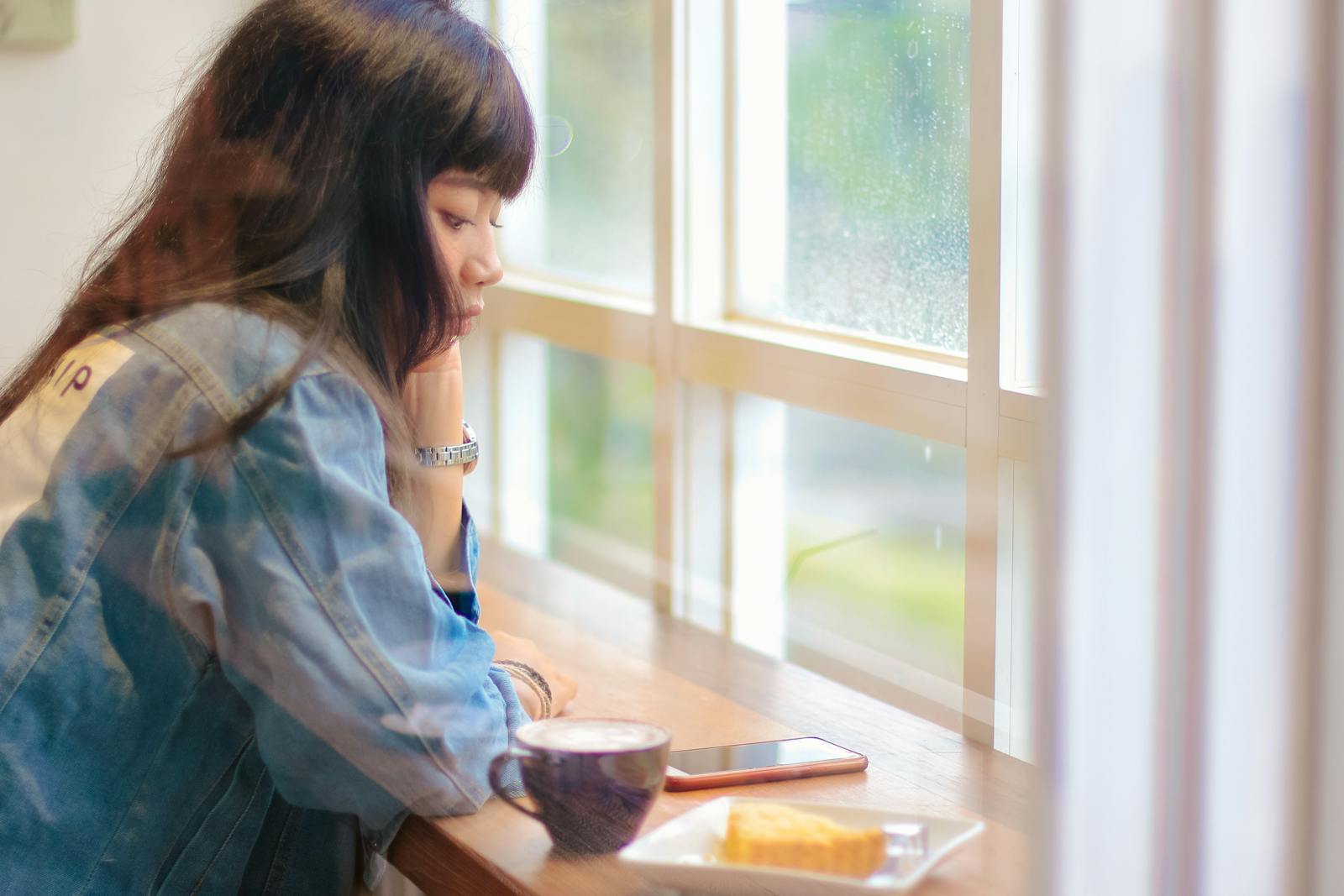
Adversity Builds Skills. It Also Builds Walls.
Research from Concordia University, led by Steve Granger and published in the Journal of Business and Psychology, tracked thousands of British children born in 1970 from birth into their mid-twenties. The study examined how socioeconomic adversity and affluence shaped professional trajectories. Children from affluent backgrounds benefited from nepotistic opportunities and stable support structures. Children from adverse backgrounds faced chronic stress and limited access to developmental resources that compounded over time.
Granger put it directly: “Early exposure to adversity, whether dysfunction in the home, job insecurity, constantly moving or other examples of economic stress, can deprive children of essential resources like stable family environments and quality parenting. These experiences impede their development throughout childhood and adolescence, and can perpetuate their disadvantages into adulthood.”
What the study illuminates for our purposes is the compounding effect. The child who develops exceptional social attentiveness as a survival strategy doesn’t just carry the skill forward. They carry the entire context: the stress, the hypervigilance, the sense that their worth depends on their usefulness to others. The skill and the wound arrive together.
I grew up watching this in my own community outside Manchester. As jobs disappeared and economic stress mounted, the kids who became most attuned to other people’s emotional states weren’t the ones from stable homes. They were the ones from houses where a parent’s mood could turn the whole evening sideways. Those kids grew into adults with remarkable social intelligence and, frequently, a deep inability to ask for anything for themselves. My father was one of them. So, I suspect, was I.
Recognition Without Romanticising
The important thing is not to turn this into a tidy redemption arc. Hypervigilance born from childhood adversity is a real adaptation with real costs. Ford’s research describes how the survival brain, once activated, impacts motivation, emotional regulation, and executive function in ways that can persist for decades. The downstream effects in adult relationships are well documented: difficulty trusting, chronic self-sacrifice, and a pattern of over-functioning that eventually leads to burnout or resentment.
But Dugan’s research offers something useful here. Her team found that attachment styles are not fixed. Dugan’s research suggests that people can develop secure adult relationships even if their parental relationships were problematic. Adult relationships can even reshape how we remember and process childhood trauma, which suggests the architecture is more flexible than it feels from the inside.
That flexibility is the part worth paying attention to. The person who remembers your coffee order developed that skill in a specific context, for specific reasons. The skill itself is real and valuable. The question is whether they can ever deploy it from a place of genuine choice rather than compulsion.
Because there’s a difference between noticing what someone needs because you want to care for them and noticing what someone needs because some part of your nervous system still believes that failing to notice is dangerous. The behaviour looks identical from the outside. The internal experience is completely different.
The next time someone remembers a small detail about your life, something you mentioned once months ago, consider the possibility that their attentiveness isn’t effortless. Consider that it was built in conditions you can’t see. And consider that the most generous thing you could do in return isn’t to compliment their memory. It’s to ask them something about themselves. Because the odds are good that nobody taught them that anyone would ever bother to remember their preferences, too.
That, in the end, is how the architecture begins to change. Not through grand therapeutic breakthroughs, though those have their place. But through the small, repeated experience of being noticed by someone who has no reason to monitor you, no threat to manage, no mood to pre-empt. Just someone who remembered your coffee order because they wanted to. For people who grew up reading rooms to survive, that kind of attention — freely given, with nothing at stake — can feel almost incomprehensible at first. But it is also, if they let it in, the beginning of learning that they are allowed to be seen without first making themselves useful.
Feature image by Ketut Subiyanto on Pexels