No Result
View All Result
  • Login
Sunday, July 5, 2026
theadvisertimes.com
  • Home
  • Business
  • Financial Planning
  • Personal Finance
  • Investing
  • Money
  • Economy
  • Markets
  • Stocks
  • Trading
  • Home
  • Business
  • Financial Planning
  • Personal Finance
  • Investing
  • Money
  • Economy
  • Markets
  • Stocks
  • Trading
No Result
View All Result
theadvisertimes.com
No Result
View All Result
Home Startups

The Pistol shrimp snaps its claw so fast it creates a bubble that briefly reaches 4,700°C — nearly the surface temperature of the sun — and stuns prey with a flash of light the animal itself cannot see

by theadvisertimes.com
3 weeks ago
in Startups
Reading Time: 6 mins read
A A
0
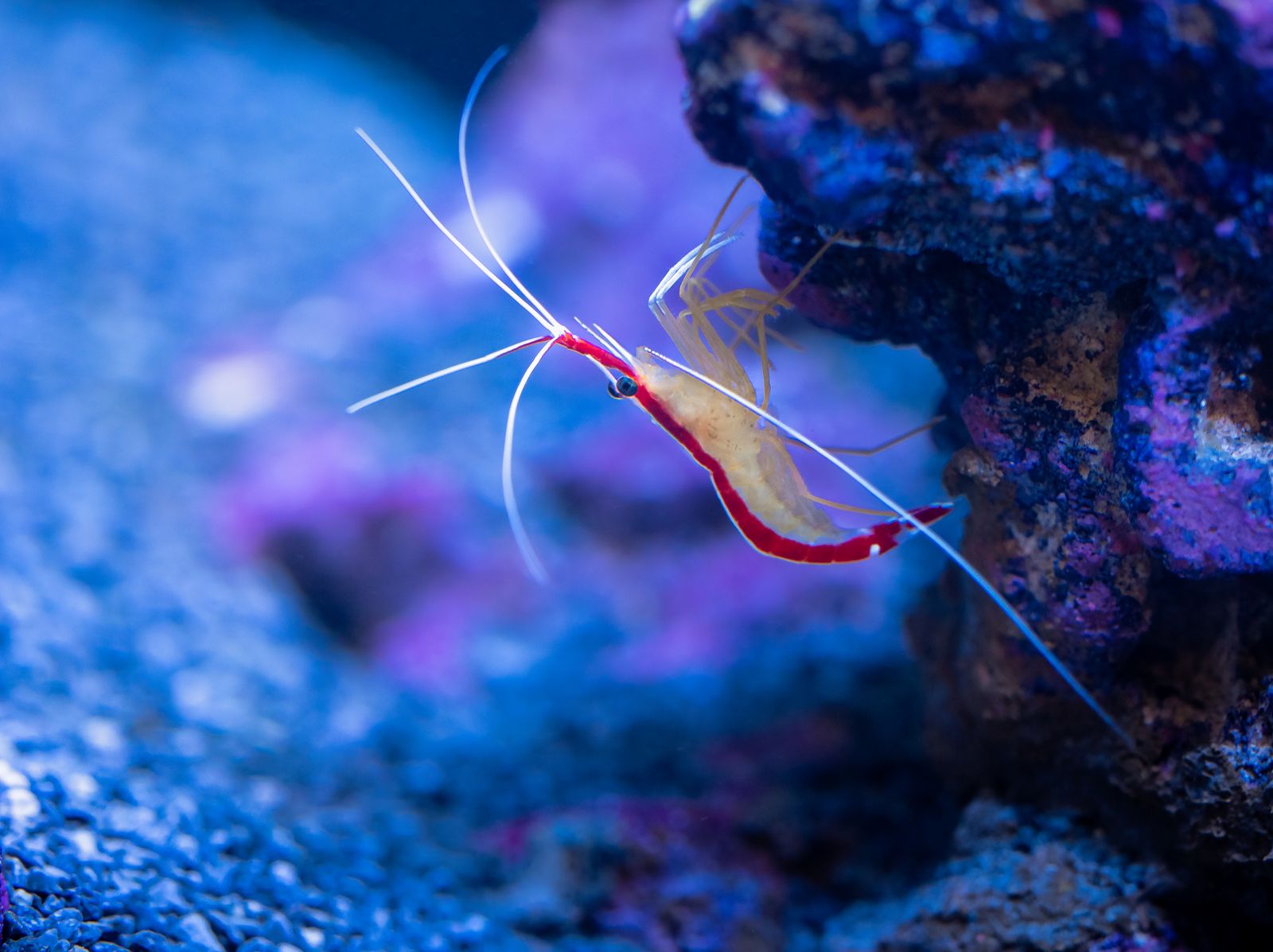
The Pistol shrimp snaps its claw so fast it creates a bubble that briefly reaches 4,700°C — nearly the surface temperature of the sun — and stuns prey with a flash of light the animal itself cannot see
Share on FacebookShare on TwitterShare on LInkedIn


When marine acousticians first lowered hydrophones into tropical reefs in the early twentieth century, they reported back a sound like fat sizzling in a pan, a continuous crackle that drowned out almost everything else. Submariners during the Second World War noticed it too, and some of them used the racket as cover. The source turned out to be an animal barely an inch long, hiding in a burrow, firing a claw fast enough to vaporise seawater.

The pistol shrimp cocks its oversized claw like a flintlock and releases it so fast that the jet of water it shoots out drops the surrounding pressure low enough to vaporise the sea itself. The vapour bubble that forms collapses in a fraction of a millisecond, and in that collapse the gas trapped inside is crushed to temperatures of around 4,700°C, close to the 5,500°C surface of the sun, accompanied by a flash of light too brief and too dim for the shrimp to ever perceive.

It eats worms, small crustaceans, shellfish, and the occasional fish unlucky enough to drift past the entrance to its hole. It hunts by ambush, and the weapon it ambushes with is a piece of physics so extreme that engineers are now copying it to clean semiconductor wafers.

The claw is a coiled spring

Pistol shrimp grow two claws of wildly different size. The smaller one looks like a standard shrimp pincer. The larger one, sometimes nearly half the body length of the animal, is a mechanical device. Its two halves are called the dactyl and the propus, and on the dactyl sits a knob called the plunger, which fits into a matching socket in the propus like a piston in a cylinder.

The shrimp holds the claw open by wedging the dactyl behind a small shelf inside the joint, building tension the way a crossbow holds a bolt. According to a description of the mechanism, only adult shrimp have the muscle and joint geometry to perform the full snap. Juveniles cannot yet fire.

When the wedge releases, the dactyl swings shut. The plunger rams into the socket and drives a thin jet of water through a narrow groove at high speeds. That jet, not the closing of the claw itself, is what does the killing.

Photo by ManojMk Brucelee on Pexels

Cavitation, briefly explained

Water boils at 100°C at sea level, but it can also “boil” cold. If you drop the pressure low enough, the molecules fly apart into vapour without any added heat. This is cavitation, and it is the same phenomenon that pits the bronze blades of ship propellers and tears apart hydraulic pump impellers in industrial machinery.

A fast-moving jet of fluid leaves a wake of low pressure behind it. The shrimp’s jet moves fast enough that the seawater in its core flashes into a vapour-filled cavity, a transient bubble. Then the surrounding ocean, still at normal pressure, rushes in to fill the void.

The implosion is symmetrical. Water surges inward from all sides at speeds greater than the speed of sound in water, and the small pocket of gas trapped at the centre is compressed so quickly that the heat generated has no time to escape into the surrounding ocean. The process is, in physics terms, adiabatic. The energy stays concentrated.

It is the same broad principle by which a diesel engine ignites fuel without a spark, or by which a lightning bolt’s superheated channel produces thunder. Compress a gas fast enough, and it cooks.

The flash the shrimp cannot see

High-speed cameras and photomultipliers trained on captive pistol shrimp have revealed that each snap is accompanied by a brief flash of light. The effect resembles sonoluminescence, the phenomenon in which sound waves drive bubbles to collapse with enough violence to emit photons.

The flash is brief and dim. A human eye would never catch it. The shrimp’s own eyes, which are tuned for the dim blue-green of shallow Atlantic water, cannot register it either. The animal evolved a light-producing weapon that is, for it, invisible.

The flash is a side effect. What matters for the shrimp is the shockwave that travels outward through the water from the same collapse, and the pressure pulse that arrives at whatever small worm or fish was loitering nearby. The pulse can stun or kill prey several centimetres away, without the shrimp ever touching it.

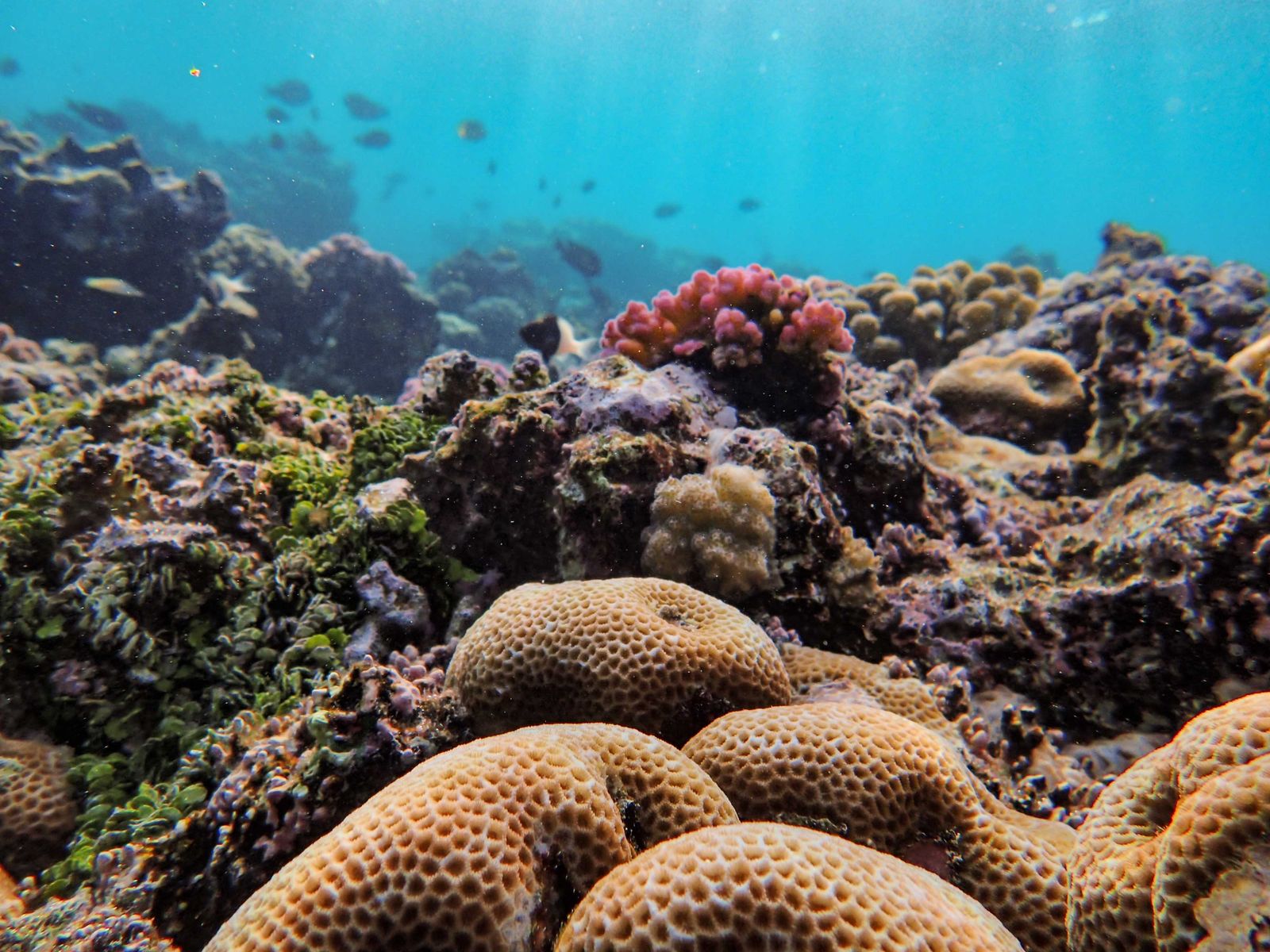
The sound produced at close range is louder than a gunshot, louder than a sperm whale’s click. In a coral reef at dusk, a colony of snapping shrimp produces a sound like frying bacon that submariners in the Second World War sometimes used as acoustic cover.
coral reef shrimp
Photo by Francesco Ungaro on Pexels

Hunting by physics, not by sight

How the shrimp decides when to fire is its own quiet puzzle. It hunts largely by touch and chemical sensing, often with its long antennae extended from the mouth of a burrow. It does not need to see the prey clearly. It needs only to know that something edible has entered the kill zone, and to swing the claw in the right direction.

This kind of simple sensing-and-firing rule is exactly the sort of behaviour that researchers at the University of Toyama in Japan recently modelled in a study on how predator and prey strategies emerge from minimal sensory abilities. Professor Hiroyuki Ichijo and colleagues showed that animals with only basic detection and movement rules — sense an opponent within a certain range, then respond — settle into stable hunting strategies such as chasing, ambush, escape, or freezing, without needing any sophisticated cognition.

The pistol shrimp sits at the ambush end of that spectrum. Short sensing range, explosive response, low metabolic cost. It does not chase. It waits, and when something brushes the trigger, it fires once, and the prey is already dead before the bubble has finished collapsing.

A weapon for talking, too

Not every snap is meant to kill. Pistol shrimp also snap at each other to warn rivals away from a burrow, to advertise size, perhaps to identify sex. Differences in snapping characteristics have been observed between individuals, and the shrimp appear sensitive to these acoustic variations.

Crucially, these social snaps are deliberately weaker. The jet does not move fast enough to form a cavitation bubble. The intruder hears the warning, feels a small pressure pulse, and survives the conversation. A full-power snap, by contrast, is reserved for prey and serious threats.

Pistol shrimp are also famous for forming partnerships with goby fish. The shrimp digs and maintains a shared burrow; the goby, with better eyesight, sits at the entrance and twitches its tail when a predator appears, sending the shrimp scurrying back inside. The arrangement is one of the more elegant interspecific contracts in the ocean, and a reminder that even an animal armed with a sonic weapon prefers to outsource its lookout duty.

Tool use, partnership, and weaponised physics in the same body plan. Among invertebrates, only a handful of animals operate at this level of behavioural complexity. Silicon Canals has previously written about sea otters that carry a favourite anvil rock in a pouch of skin to crack shellfish, another animal that has solved the problem of opening hard-shelled prey with a piece of held machinery rather than a stronger jaw.

Engineering catches up

The pistol shrimp is no longer just a curiosity. Its claw geometry has become an active research subject for engineers trying to generate controlled cavitation in industrial settings.

As biologist Scott Travers describes in a Forbes feature on the shrimp’s physics, the shrimp’s snapping dynamics are being adapted for immersion cleaning of delicate surfaces. The principle is identical: generate a tightly focused cavitation bubble near a contaminated surface, let it collapse, and the resulting micro-shockwave dislodges particles that ultrasonic baths and pressure-flooding methods cannot reach. Semiconductor manufacturers in particular are interested. Wafers are now patterned at nanometre scales where any stray dust grain destroys a chip.

A biological design refined over tens of millions of years turns out to solve a problem invented in 2024.

The numbers, kept in proportion

Hold the scale in mind. The shrimp is about the length of a paperclip, roughly an inch. The jet it fires lasts less than a millisecond. The cavitation bubble it produces is a few millimetres across, smaller than a pea. The peak temperature inside that bubble reaches around 4,700°C. An individual shrimp snaps hundreds of times a day; a colony does so continuously, generating one of the dominant sources of ambient noise on tropical reefs, audible to any hydrophone lowered into the water.

The engineering numbers are smaller and newer. Semiconductor wafers are patterned at nanometre scales, where a single stray dust grain ruins a chip, and the shrimp-inspired cavitation method targets exactly that scale of contaminant. One biological mechanism, refined over tens of millions of years, now sits inside a cleaning rig built in the last two.

That is the trade. An inch-long animal in a sand burrow in the Gulf of Mexico, firing a claw at a worm, and a chip fabrication line on the other side of the world borrowing the same trick to make the silicon that runs everything else.




Source link

Tags: 4700CanimalbrieflyBubbleclawcreatesFastFlashLightPistolpreyreachesShrimpsnapsstunsSunSurfacetemperature
ShareTweetShare
Previous Post

Pyth Network Targets Bloomberg’s $50 Billion Market-Data Empire

Next Post

FPI exodus continues, Rs 62,800 cr pulled out from equities in first fortnight of June

Related Posts

The truth about 10,000 steps a day: the number wasn’t science, it was the brand name of a pedometer a Japanese company launched around the 1964 Tokyo Olympics — and later research finds real health benefits from as few as 4,000 steps

The truth about 10,000 steps a day: the number wasn’t science, it was the brand name of a pedometer a Japanese company launched around the 1964 Tokyo Olympics — and later research finds real health benefits from as few as 4,000 steps

by theadvisertimes.com
July 4, 2026
0

The daily step goal on hundreds of millions of wrists and phones did not come out of a laboratory. It...

We tend to think using AI well is a technical skill, but the evidence from early adopters suggests it is almost entirely a clarity skill — the people getting extraordinary results are simply unusually clear about what outcome they are actually after

We tend to think using AI well is a technical skill, but the evidence from early adopters suggests it is almost entirely a clarity skill — the people getting extraordinary results are simply unusually clear about what outcome they are actually after

by theadvisertimes.com
July 4, 2026
0

We tend to treat being good at AI as a technical skill, something to do with clever prompts, the right...

I use an AI as an external hard drive for my own memory, and the strange part is how much better my thinking got once I stopped asking my brain to store everything

I use an AI as an external hard drive for my own memory, and the strange part is how much better my thinking got once I stopped asking my brain to store everything

by theadvisertimes.com
July 3, 2026
0

I started using AI as an external memory. Somehow, it made me feel more human — which feels like it...

Roughly one in eight American adults is now on a GLP-1 drug like Ozempic — a class that grew out of a hormone one Bronx doctor found in Gila monster venom, then patented himself after his own employer passed on it

Roughly one in eight American adults is now on a GLP-1 drug like Ozempic — a class that grew out of a hormone one Bronx doctor found in Gila monster venom, then patented himself after his own employer passed on it

by theadvisertimes.com
July 3, 2026
0

John Eng, a Bronx endocrinologist working at the Veterans Affairs Medical Center, spent years hunting for a hormone that could...

Nebex Raises M to Connect Sovereign Buyers, Space Companies, and Capital in One Platform – AlleyWatch

Nebex Raises $30M to Connect Sovereign Buyers, Space Companies, and Capital in One Platform – AlleyWatch

by theadvisertimes.com
July 2, 2026
0

For decades, the global space industry operated as a closed loop: a handful of legacy defense contractors built hardware for...

A lot of men reach their sixties having built their entire sense of usefulness on being the one who fixes things, and the quiet crisis nobody names is what happens to them the year there is finally nothing left to fix.

A lot of men reach their sixties having built their entire sense of usefulness on being the one who fixes things, and the quiet crisis nobody names is what happens to them the year there is finally nothing left to fix.

by theadvisertimes.com
July 2, 2026
0

Surveys of retired men in the UK and US consistently find the same uncomfortable pattern: a significant share report a...

Next Post
FPI exodus continues, Rs 62,800 cr pulled out from equities in first fortnight of June

FPI exodus continues, Rs 62,800 cr pulled out from equities in first fortnight of June

Mcap of eight of top-10 most valued firms surges by Rs 1.90 lakh cr; ICICI Bank shines

Mcap of eight of top-10 most valued firms surges by Rs 1.90 lakh cr; ICICI Bank shines

  • Trending
  • Comments
  • Latest
Should You Offer a Concession to Get Your Apartment Leased Faster?

Should You Offer a Concession to Get Your Apartment Leased Faster?

June 15, 2026
5 things financial therapists want every advisor to know

5 things financial therapists want every advisor to know

June 26, 2026
Understanding risk remains a major investor blind spot: TIAA Institute

Understanding risk remains a major investor blind spot: TIAA Institute

June 5, 2026
Weekend Reading For Financial Planners (June 27–28)

Weekend Reading For Financial Planners (June 27–28)

June 26, 2026
Prime Day, June 2026: How Retailers Competed With Amazon

Prime Day, June 2026: How Retailers Competed With Amazon

June 29, 2026
AI shopping agents are coming. No one is ready for them

AI shopping agents are coming. No one is ready for them

June 12, 2026
Bitcoin’s weekend rally faces a k trap as traders still hedge for another drop

Bitcoin’s weekend rally faces a $66k trap as traders still hedge for another drop

0
The Vine That Ate the South: Government Solutions vs. Market Solutions

The Vine That Ate the South: Government Solutions vs. Market Solutions

0
Is RTX Corporation (RTX) A Good Stock To Buy Now?

Is RTX Corporation (RTX) A Good Stock To Buy Now?

0
Travelers (TRV) Has an Underwriting-and-Investment Engine Bigger Than a Catastrophe Narrative

Travelers (TRV) Has an Underwriting-and-Investment Engine Bigger Than a Catastrophe Narrative

0
Markets may consolidate; micro, small and mid-caps could lead alpha generation, says Quant Mutual Fund

Markets may consolidate; micro, small and mid-caps could lead alpha generation, says Quant Mutual Fund

0
U.S. outpacing China in fossil fuel spending for first time in decades – FT (XLE:NYSEARCA)

U.S. outpacing China in fossil fuel spending for first time in decades – FT (XLE:NYSEARCA)

0
U.S. outpacing China in fossil fuel spending for first time in decades – FT (XLE:NYSEARCA)

U.S. outpacing China in fossil fuel spending for first time in decades – FT (XLE:NYSEARCA)

July 4, 2026
Bitcoin’s weekend rally faces a k trap as traders still hedge for another drop

Bitcoin’s weekend rally faces a $66k trap as traders still hedge for another drop

July 4, 2026
The truth about 10,000 steps a day: the number wasn’t science, it was the brand name of a pedometer a Japanese company launched around the 1964 Tokyo Olympics — and later research finds real health benefits from as few as 4,000 steps

The truth about 10,000 steps a day: the number wasn’t science, it was the brand name of a pedometer a Japanese company launched around the 1964 Tokyo Olympics — and later research finds real health benefits from as few as 4,000 steps

July 4, 2026
Nancy Pelosi’s husband could face misdemeanor charges after hit-and-run that caused ‘major damage’

Nancy Pelosi’s husband could face misdemeanor charges after hit-and-run that caused ‘major damage’

July 4, 2026
US Treasury Opens ‘Trump Accounts’ to Stock Donations as 6 Million Families Enroll

US Treasury Opens ‘Trump Accounts’ to Stock Donations as 6 Million Families Enroll

July 4, 2026
1 Reason to Buy This Wide-Moat Stock Right Now

1 Reason to Buy This Wide-Moat Stock Right Now

July 4, 2026
theadvisertimes.com

Get the latest news and follow the coverage of Business & Financial News, Stock Market Updates, Analysis, and more from the trusted sources.

CATEGORIES

  • Business
  • Cryptocurrency
  • Economy
  • Financial Planning
  • Investing
  • Market Analysis
  • Markets
  • Money
  • Personal Finance
  • Startups
  • Stock Market
  • Trading

LATEST UPDATES

  • U.S. outpacing China in fossil fuel spending for first time in decades – FT (XLE:NYSEARCA)
  • Bitcoin’s weekend rally faces a $66k trap as traders still hedge for another drop
  • The truth about 10,000 steps a day: the number wasn’t science, it was the brand name of a pedometer a Japanese company launched around the 1964 Tokyo Olympics — and later research finds real health benefits from as few as 4,000 steps
  • Our Great Privacy Policy
  • Terms of Use, Legal Notices & Disclosures
  • About Us
  • Contact Us

© Copyright 2024 All Rights Reserved
See articles for original source and related links to external sites.

Welcome Back!

Login to your account below

Forgotten Password?

Retrieve your password

Please enter your username or email address to reset your password.

Log In
No Result
View All Result
  • Home
  • Business
  • Financial Planning
  • Personal Finance
  • Investing
  • Money
  • Economy
  • Markets
  • Stocks
  • Trading

© Copyright 2024 All Rights Reserved
See articles for original source and related links to external sites.