No Result
View All Result
  • Login
Thursday, June 25, 2026
theadvisertimes.com
  • Home
  • Business
  • Financial Planning
  • Personal Finance
  • Investing
  • Money
  • Economy
  • Markets
  • Stocks
  • Trading
  • Home
  • Business
  • Financial Planning
  • Personal Finance
  • Investing
  • Money
  • Economy
  • Markets
  • Stocks
  • Trading
No Result
View All Result
theadvisertimes.com
No Result
View All Result
Home Startups

A mosasaur called Tylosaurus grew to more than 13 metres in the Late Cretaceous seas, roughly twice the length of a great white shark, with a second set of teeth on the roof of its mouth that drove prey one-way down its throat

by theadvisertimes.com
3 hours ago
in Startups
Reading Time: 5 mins read
A A
0
A mosasaur called Tylosaurus grew to more than 13 metres in the Late Cretaceous seas, roughly twice the length of a great white shark, with a second set of teeth on the roof of its mouth that drove prey one-way down its throat
Share on FacebookShare on TwitterShare on LInkedIn


Tylosaurus was a marine lizard with a battering-ram snout, a tail built for ambush, and a body that stretched past 13 metres — long enough that a fully grown adult would have spanned more than two great white sharks laid nose to tail. It ruled the warm, shallow seas that covered much of North America between 86 and 80 million years ago, and a newly described species from northern Texas, formally named Tylosaurus rex, pushes the upper end of the genus to around 43 feet, or roughly 13 metres, with finely serrated teeth that paleontologists rarely see in mosasaurs.

That is the headline number. The biology behind it is stranger.

Photo by Suki Lee on Pexels

A lizard that went back to the sea

Mosasaurs were squamates — the same broad reptile group that today includes monitor lizards, iguanas, and snakes. Sometime in the middle of the Cretaceous, one lineage of land-dwelling lizards walked into the water and never came back. Within about 30 million years they evolved paddle-like limbs, a sculling tail, hinged jaws, and body lengths that rivalled small whales. By the close of the Cretaceous they had spread into oceans on every continent, including what is now Antarctica.

Tylosaurus sat near the top of that food web. The genus is recognised by its long, pointed, tooth-free rostrum — the bony beak at the tip of its snout, which it appears to have used like a ramming weapon. Fossils show snapped-off rostrum tips and healed fractures in the jaws of other Tylosaurus specimens, suggesting head-on collisions either with prey or with rivals.

Twice the length of a great white

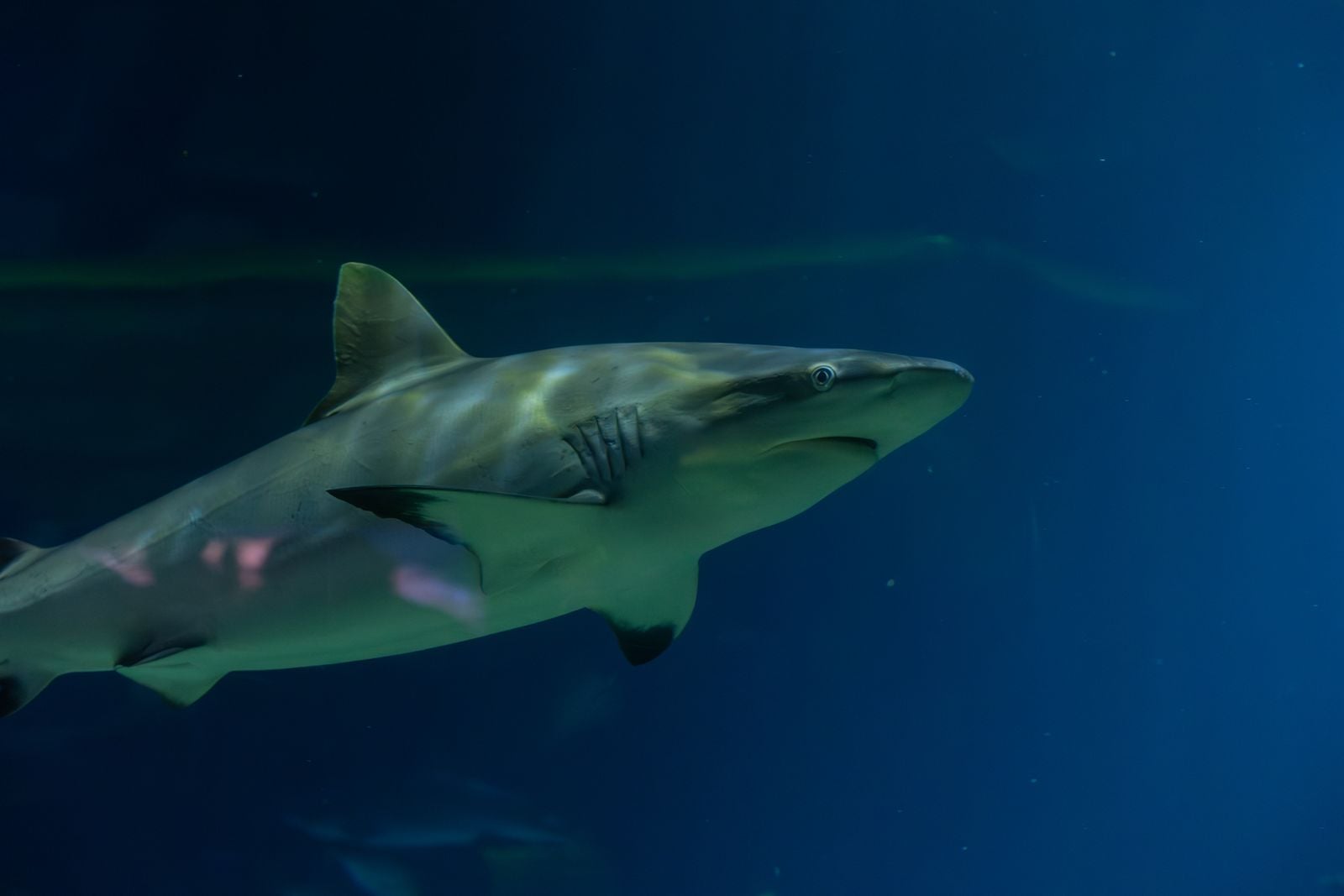
Modern great white sharks typically max out at around six metres. A 13-metre Tylosaurus, then, would have been more than twice as long, and substantially heavier across the trunk. According to researchers at the Perot Museum of Nature and Science, T. rex was roughly twice the length of the largest great white sharks and considerably more aggressive than other mosasaurs.

Fossil specimens of Tylosaurus rex carry evidence of violent encounters, including damage interpreted as the result of combat with other members of its own species. Mosasaur-on-mosasaur violence at this scale is something the fossil record had only hinted at before.

Famous skeletons long displayed as Tylosaurus proriger are now being reassigned to T. rex. The genus, in other words, was bigger and more diverse than museum labels suggested.

The second row of teeth on the roof of the mouth

Open a Tylosaurus skull and the strangest feature is not the size of the marginal teeth along the jaw. It is what sits behind them. Like modern snakes and monitor lizards, mosasaurs carried a second set of teeth rooted in the palate — paired bones called pterygoids, set into the roof of the mouth. These pterygoid teeth pointed backward, toward the throat.

The function is mechanical. A fish or ammonite gripped by the outer jaws could not slide back out. Once the prey moved past the first row, the palatal teeth caught it like the barbs of a fish hook turned the wrong way. The animal could only travel one direction — down. Paleontologists describe the arrangement as a ratchet: marginal teeth seize, pterygoid teeth advance, jaws release and re-grip further back. The prey, alive or dead, is walked into the throat.

It is the same swallowing system a python uses on a deer, scaled up for a 13-metre predator working in salt water.
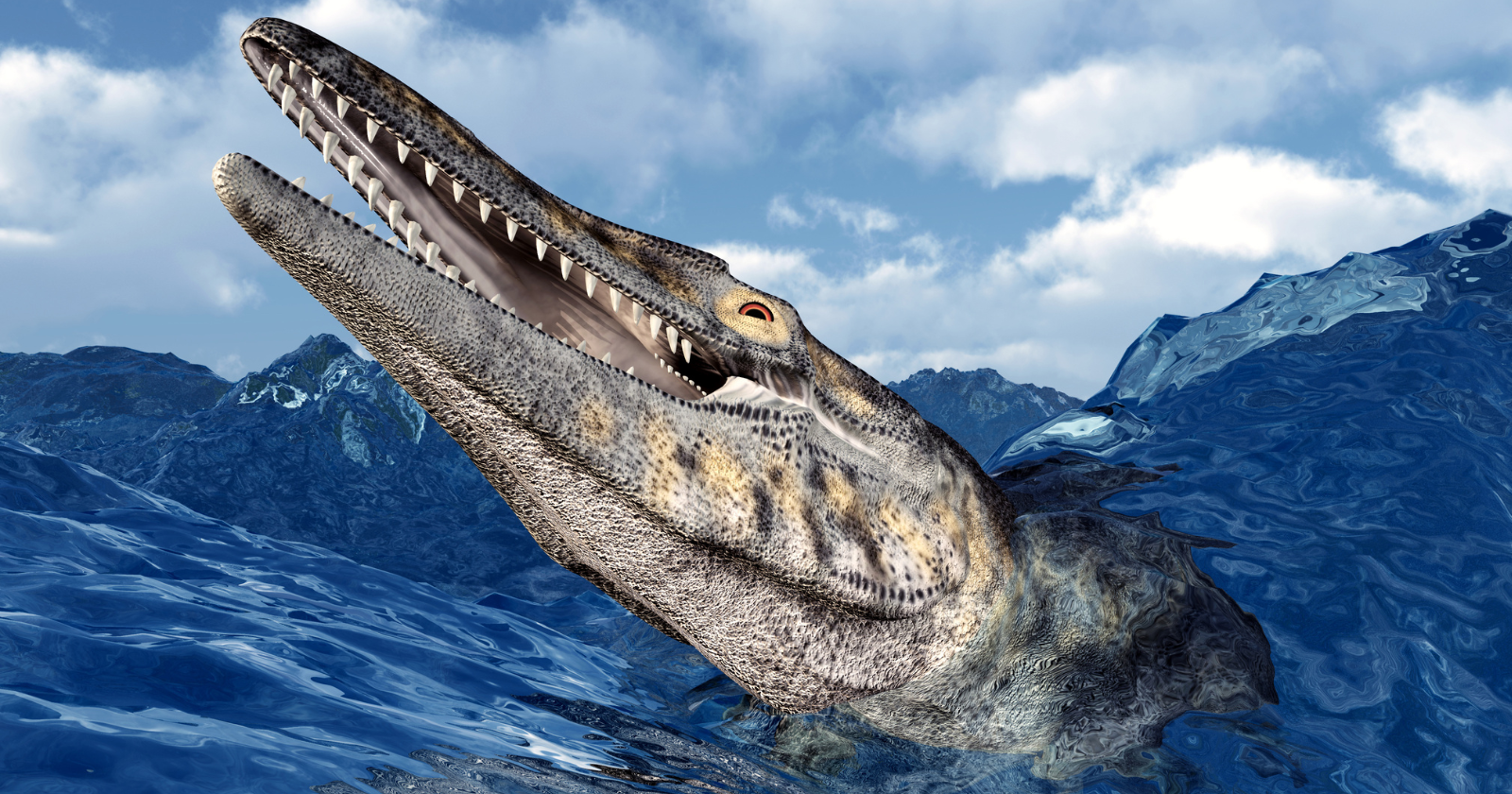
tylosaurus illustration ocean
Photo by Karam Alani on Pexels

What was on the menu

Stomach contents from Tylosaurus specimens found in the Smoky Hill Chalk of Kansas have included plesiosaur bones, sharks, bony fish, sea turtles, and even other, smaller mosasaurs. The animal was a generalist apex predator, the marine equivalent of a tyrannosaur with a 360-degree hunting ground.

A 2023 study in Scientific Reports applied three-dimensional dental microwear texture analysis to teeth from five mosasaur species in the type-Maastrichtian beds of the Netherlands and Belgium. The technique reads the sub-micrometre scratches and pits left on a tooth by its last meals and compares them with wear patterns on the teeth of living monitor lizards and crocodilians on known diets. The results showed that large mosasaurs like Mosasaurus hoffmanni did not occupy a single tight dietary niche — their wear signatures sprawled across the texture space, indicating a flexible carnivore that ate whatever it could catch.

Tylosaurus appears to have operated the same way. Some specimens in Kansas were found with the remains of half-grown plesiosaurs in their gut cavities. Others have ammonite shells fractured in patterns consistent with mosasaur bite marks.

A tooth in a river

The genus also ranged further inland than expected. A 66-million-year-old mosasaur tooth recovered from North Dakota, USA, suggested that some of these animals hunted in rivers as well as open ocean. The fossil came from a freshwater deposit far from the Cretaceous coastline, and chemical signatures in the enamel matched a river system rather than a marine environment. It is the kind of detail that rewrites the range maps drawn in textbooks fifty years ago.

If mosasaurs of any size were patrolling estuaries and inland waterways, the niche they occupied was broader than a strictly marine apex predator. Imagine a saltwater crocodile with the bulk of an orca, capable of swimming upstream.

Competition from the soft-bodied

The Late Cretaceous ocean Tylosaurus dominated was not empty otherwise. Recent fossil work on chitinous beaks recovered from Japan and Vancouver Island has described two species of giant finned octopus — Nanaimoteuthis jeletzkyi and N. haggarti — that lived between 100 million and 72 million years ago. The larger species may have reached a total body length of up to 18.6 metres, comparable to an articulated bus and longer than today’s giant squid.

Wear on the fossil beaks suggests these octopuses crushed shells and bones, meaning Tylosaurus and other mosasaurs likely shared the top of the food chain with soft-bodied competitors that had independently evolved jaws, lost their armour, and grown enormous. The Cretaceous ocean had at least two solutions to the apex-predator problem moving through it at the same time.

How the Texas giant was identified

The recognition of Tylosaurus rex as a distinct species began when paleontologists noticed that certain fossil specimens did not match the original T. proriger material. The Texas specimens were larger, came from younger rocks — about 80 million years old, against roughly 84 million years for most Kansas T. proriger — and carried finely serrated teeth rarely seen elsewhere in the genus.

More than a dozen fossils across multiple museums were eventually reassigned. The holotype is now on display at the Perot Museum in Dallas. The name itself nods to earlier observations that giant tylosaurs from northeast Texas looked unusual.

The team behind the reassignment also rebuilt the dataset used to track mosasaur evolutionary relationships, which had barely changed in three decades. Their revised framework suggests that earlier family trees of the group will need redrawing.

The end of the sea kings

Tylosaurus did not survive the asteroid impact that closed the Cretaceous 66 million years ago. Mosasaurs as a whole vanished within a geologically narrow window of the boundary, alongside the non-avian dinosaurs, the ammonites, and most of the ocean’s large reptiles. Whatever made a 13-metre, palate-toothed, river-capable apex predator possible in those warm shallow seas was undone in a span of time that, on the scale of mosasaur evolution, amounted to an afternoon.

The chalk beds of Kansas, the Pierre Shale of South Dakota, and the marl quarries outside Dallas still produce their bones. Pull a Tylosaurus jaw out of the rock and run a finger along the roof of its mouth, and the second row of teeth is still there — angled backward, pointing the way the last meal went.




Source link

Tags: calledCretaceousDroveGreatGrewLateLengthMetresmosasaurMouthOneWaypreyRoofRoughlySeassetSharkTeethThroatTylosauruswhite
ShareTweetShare
Previous Post

Atlas Plans USAFi Launch With Nasdaq ETF Backing and VARA Approval

Next Post

After NY Blowout, Can Democrats Ever Shed Socialism?

Related Posts

High Standards Without Harsh Leadership

High Standards Without Harsh Leadership

by theadvisertimes.com
June 24, 2026
0

One of the biggest misconceptions I encounter when coaching leaders is the belief that they must choose between being nice...

Titan Banking AI Raises M to Close the Gap Between AI Speed and Banking Governance – AlleyWatch

Titan Banking AI Raises $3M to Close the Gap Between AI Speed and Banking Governance – AlleyWatch

by theadvisertimes.com
June 24, 2026
0

Financial institutions face a structural mismatch that has become impossible to ignore: regulators now expect banks to show their work...

MoEngage buys Aampe to bet enterprise marketing’s future belongs to per-customer AI agents, not segments

MoEngage buys Aampe to bet enterprise marketing’s future belongs to per-customer AI agents, not segments

by theadvisertimes.com
June 24, 2026
0

Indian customer engagement software firm MoEngage has paid tens of millions of dollars in cash to acquire San Francisco-based AI...

How to Make Values Real Rather than Rhetoric

How to Make Values Real Rather than Rhetoric

by theadvisertimes.com
June 23, 2026
0

Many companies have a set of guiding principles or core values they claim to uphold. The language is often similar,...

A Detroit pension fund just sued Uber’s board for running a ‘serial compliance offender’ culture — and the math behind the lawsuit is what every gig-economy director should be reading tonight

A Detroit pension fund just sued Uber’s board for running a ‘serial compliance offender’ culture — and the math behind the lawsuit is what every gig-economy director should be reading tonight

by theadvisertimes.com
June 23, 2026
0

A Detroit pension fund has filed a derivative lawsuit against Uber’s board and CEO Dara Khosrowshahi, accusing the ride-hailing company...

We give people a few days and expect them back as themselves, when the science of loss says grief takes no days off at all, and the shame around admitting that is its own quiet cruelty

We give people a few days and expect them back as themselves, when the science of loss says grief takes no days off at all, and the shame around admitting that is its own quiet cruelty

by theadvisertimes.com
June 22, 2026
0

The average bereavement policy in Europe gives employees somewhere between three and five days for the death of an immediate...

Next Post
After NY Blowout, Can Democrats Ever Shed Socialism?

After NY Blowout, Can Democrats Ever Shed Socialism?

Bureaucratic Information Gathering – Econlib

Bureaucratic Information Gathering - Econlib

  • Trending
  • Comments
  • Latest
Should You Offer a Concession to Get Your Apartment Leased Faster?

Should You Offer a Concession to Get Your Apartment Leased Faster?

June 15, 2026
Understanding risk remains a major investor blind spot: TIAA Institute

Understanding risk remains a major investor blind spot: TIAA Institute

June 5, 2026
Anthropic’s confidential S-1 signals summer AI IPO race could heat up fast

Anthropic’s confidential S-1 signals summer AI IPO race could heat up fast

June 2, 2026
9 Best Cheap Cell Phone Plans That Will Save You Money

9 Best Cheap Cell Phone Plans That Will Save You Money

June 3, 2026
10 Low PEG Ratio Dividend Stocks

10 Low PEG Ratio Dividend Stocks

May 18, 2026
AI shopping agents are coming. No one is ready for them

AI shopping agents are coming. No one is ready for them

June 12, 2026
Bain & Co luxury report finds consumers using GLP-1s are rebuying luxury wardrobes

Bain & Co luxury report finds consumers using GLP-1s are rebuying luxury wardrobes

0
HydroJug Sport Stainless Steel Tumbler with Straw only .49! {Prime Day Deal}

HydroJug Sport Stainless Steel Tumbler with Straw only $22.49! {Prime Day Deal}

0
SaaS for Channel Management: A 2026 Guide to Automated Growth

SaaS for Channel Management: A 2026 Guide to Automated Growth

0
HSBC Wealth Survey Shows AI Losing Out to Humans in Key Areas

HSBC Wealth Survey Shows AI Losing Out to Humans in Key Areas

0
Bureaucratic Information Gathering – Econlib

Bureaucratic Information Gathering – Econlib

0
Hologic (HOLX) Has a Women’s-Health and Diagnostics Platform Story Bigger Than the Post-COVID Comedown

Hologic (HOLX) Has a Women’s-Health and Diagnostics Platform Story Bigger Than the Post-COVID Comedown

0
HydroJug Sport Stainless Steel Tumbler with Straw only .49! {Prime Day Deal}

HydroJug Sport Stainless Steel Tumbler with Straw only $22.49! {Prime Day Deal}

June 25, 2026
Bain & Co luxury report finds consumers using GLP-1s are rebuying luxury wardrobes

Bain & Co luxury report finds consumers using GLP-1s are rebuying luxury wardrobes

June 25, 2026
Bureaucratic Information Gathering – Econlib

Bureaucratic Information Gathering – Econlib

June 25, 2026
After NY Blowout, Can Democrats Ever Shed Socialism?

After NY Blowout, Can Democrats Ever Shed Socialism?

June 25, 2026
A mosasaur called Tylosaurus grew to more than 13 metres in the Late Cretaceous seas, roughly twice the length of a great white shark, with a second set of teeth on the roof of its mouth that drove prey one-way down its throat

A mosasaur called Tylosaurus grew to more than 13 metres in the Late Cretaceous seas, roughly twice the length of a great white shark, with a second set of teeth on the roof of its mouth that drove prey one-way down its throat

June 25, 2026
Atlas Plans USAFi Launch With Nasdaq ETF Backing and VARA Approval

Atlas Plans USAFi Launch With Nasdaq ETF Backing and VARA Approval

June 25, 2026
theadvisertimes.com

Get the latest news and follow the coverage of Business & Financial News, Stock Market Updates, Analysis, and more from the trusted sources.

CATEGORIES

  • Business
  • Cryptocurrency
  • Economy
  • Financial Planning
  • Investing
  • Market Analysis
  • Markets
  • Money
  • Personal Finance
  • Startups
  • Stock Market
  • Trading

LATEST UPDATES

  • HydroJug Sport Stainless Steel Tumbler with Straw only $22.49! {Prime Day Deal}
  • Bain & Co luxury report finds consumers using GLP-1s are rebuying luxury wardrobes
  • Bureaucratic Information Gathering – Econlib
  • Our Great Privacy Policy
  • Terms of Use, Legal Notices & Disclosures
  • About Us
  • Contact Us

© Copyright 2024 All Rights Reserved
See articles for original source and related links to external sites.

Welcome Back!

Login to your account below

Forgotten Password?

Retrieve your password

Please enter your username or email address to reset your password.

Log In
No Result
View All Result
  • Home
  • Business
  • Financial Planning
  • Personal Finance
  • Investing
  • Money
  • Economy
  • Markets
  • Stocks
  • Trading

© Copyright 2024 All Rights Reserved
See articles for original source and related links to external sites.