The war with Iran and the renewed conflagration on Israel’s northern front have led the defense establishment to raise extensive budgetary demands. Only in December the government set the defense budget at NIS 112 billion. Since then it has grown to NIS 144 billion, and that apparently is not the final word. Sources inform “Globes” that in closed discussions with Prime Minister Benjamin Netanyahu, the defense establishment has increased its demands to NIS 177 billion, in view of the possibility that the war with Iran will be prolonged, and that the fighting in Lebanon will escalate.
In fact, even at the time that the NIS 112 billion budget was approved, it was clear to the Ministry of Defense that it was no longer relevant. It ostensibly compromised on drafting 40,000 reservists at any given time, out of the understanding that the operation against Iran would take place within the following months. But even before war broke out, the number of reservists on active duty gradually rose to 60,000, and it currently stands at almost 100,000. If the campaign in Lebanon expands, an even more extensive draft will be required.
One main question remains open: How did a NIS 65 billion gap arise between the defense budget approved in December and the current demand, when the possibility of war with Iran was already on the cards? The government estimates that every day of fighting costs NIS 1.5 billion in military expenditure alone. Not everything is paid immediately, and some costs will be spread over several fiscal years, which means that the defense budget for 2026 will not cover all the costs of the current war.
Urgent procurement
Last week, the government approved a NIS 32 billion supplement to the 2026 defense budget, but the budget has not yet passed the Knesset. Within this framework, NIS 13 billion was added as a “special reserve” for war expenditure. And on Saturday night the government approved NIS 2.3 billion for “urgent procurement.”
This decision illustrates the problem of running an economy in wartime under a continuation budget, in which, pending Knesset approval of the 2026 budget, the government is allowed to spend one twelfth of the previous year’s budget each month.
The government estimates that the defense forces have so far spent about NIS 20 billion in fifteen days. The general assessment is that the cost of the entire war could reach NIS 50 billion, depending on how long it lasts. This sum includes munitions that have been fired, equipment that has been run down, and the extra drafting of reserves. Last year’s Operation Rising Lion against Iran, which lasted just twelve days, was estimated to have cost NIS 20 billion, but it was in a completely different format.
RELATED ARTICLES
Bank of Israel slams amended govt budget
Smotrich presents business compensation plan
Cabinet raises deficit target, Treasury cuts growth forecast
What happened to Iron Beam?
Missile damage a fraction of 2025 fighting
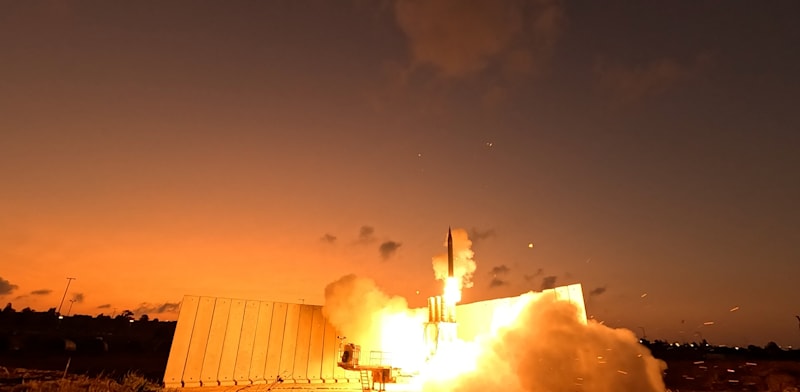
In the current campaign, the IDF is dropping about 1,000 munitions daily on average, and about 150 aircraft are accumulating many flying hours over Iran. In the first four days alone, the same amount of munitions was dropped as in the twelve days of Operation Rising Lion.
This extended activity is made possible by the cooperation with the Americans, whose refueling planes enable combat aircraft to stay longer in Iranian skies, and whose operations to neutralize Iranian capabilities directly affect the IDF’s freedom of action in the air. Meanwhile, the consumption of missile interceptors is much lower than in Operation Rising Lion, when much larger missile salvoes were fired at Israel.
The war with Iran is still at its height. While the direct budgetary cost is starting to be quantifiable, the other costs, including the expected harm to GDP and the higher fiscal deficit, are still not completely clear.
The civilian costs are no less significant than the military costs. For example, last week the government approved NIS 300 million for the National Insurance Institute to cover the plan for leave without pay, NIS 100 million to indemnify local authorities in whose areas buildings and infrastructure have been damaged, and NIS 100 million to strengthen the police force during the war.
To these expenses must be added the cost of compensating businesses that have been harmed as a result of the war. In November last year, the Israel Tax Authority presented figures in the Knesset showing that 85% of the claims arising from Operation Rising Lion had been paid, amounting to NIS 2 billion. The war also has considerable fiscal consequences. Although a successful end to it could result in a surge in the Israeli economy, the euphoric expectations that gripped the financial markets when it started have melted away.
According to the Bank of Israel, the state budget approved by the government last week raises the country’s debt:GDP ratio from 68.5% in 2025 to 70% this year. This means higher interest payments on government debt. Even before the current war, the Ministry of Finance estimated that in 2027 the cost of servicing government debt would reach NIS 64 billion. This cost is not only affected by the debt:GDP ratio, but also by the interest rate environment and by Israel’s risk premium.
Drop in credit card payments
Prolongation of the war also threatens to hit economic growth, and the effects can already be seen on the ground. The Ministry of Finance recently estimated that instead of 5.2% growth in 2026, growth will reach 4.7%. The Bank of Israel considers this an overoptimistic assessment.
The government’s fiscal deficit target has already jumped from 3.9% of GDP in December to 5.1% last week. Investment house Meitav considers 5.5% to be a more realistic figure, on the assumption that the war will last four weeks.
The indirect damage from the war can be seen in consumption figures. Credit card purchases fell by 19% in the first ten days of the war in comparison with the average level at the beginning of the year. Bank Hapoalim chief markets strategist Modi Shafrir points out however that history shows that a renewed rise can be expected when the war ends. It is still not clear what the war will do to energy prices and inflation in Israel and around the world.
To this must be added the hit to GDP from the drafting of reservists. The Ministry of Finance puts the cost of drafting one reserve soldier at almost NIS 50,000 monthly in damage to the economy, and the total economic cost of drafting the reserves at NIS 660 million a week.
At the beginning of the war the Israeli economy was almost completely shut down, and the Ministry of Finance estimates the cost of that at NIS 9.5 billion a week. Since then, the economy has partially reopened, but the education system remains closed in most parts of the country. The Ministry of Finance estimates the cost to the economy of that at NIS 1.2 billion a week, and the cost of economic sectors being shut down at NIS 2.4 billion a week.
Published by Globes, Israel business news – en.globes.co.il – on March 16, 2026.
© Copyright of Globes Publisher Itonut (1983) Ltd., 2026.