Most people think the
problem with modern finance comes down to fees, spreads, and slow transfers.
Those are real, but the deeper issue feels quieter.
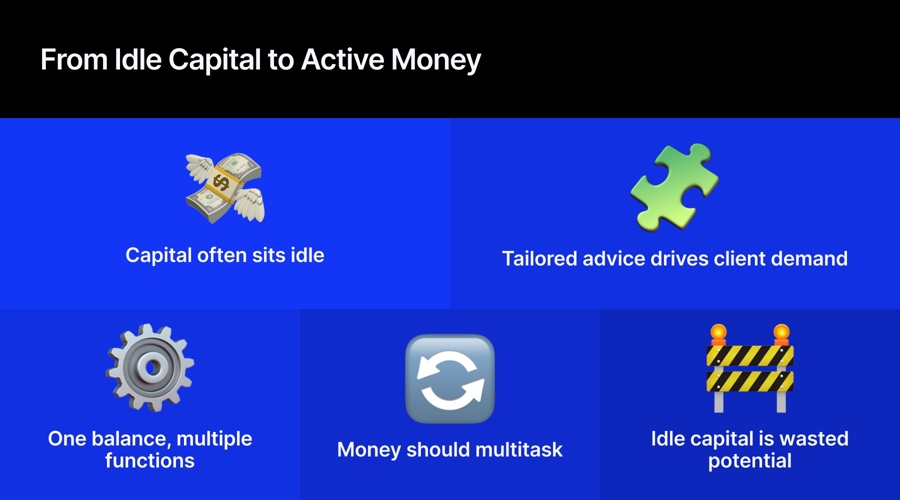
Your money spends a lot of its life doing one job at a time.
Singapore
Summit: Meet the largest APAC brokers you know (and those you still don’t!).
A balance sits in a wallet waiting for the next move. Collateral sits on an
exchange waiting for a trade. Cash sits in a bank account waiting for a
bill. Even when you chase yield, the money often gets boxed into a single lane,
earning, or collateral, or investment capital.
Every time you move it, you pay in friction. Sometimes that friction looks like
an on-chain fee. Sometimes it looks like opportunity cost. Either way, it acts
like a tax on productivity. Capital that could be doing more gets stuck in
transit, locked up, duplicated across platforms, or simply idle.
Crypto promised to unbundle finance into smarter building blocks. In practice,
many users ended up with a longer checklist. Receive funds here. Bridge there.
Park stablecoins
somewhere else. Keep separate margin on an exchange. Keep long-term holdings in
a different wallet. Track it all in spreadsheets, or just stop tracking and
hope the stack grows.
That journey drains attention as much as it drains value.
When people talk about progress in finance, they often mean capital utility.
More assets, more products, more venues, more chains. Utility matters, and it
expands what people can do.
Productivity matters more. Productivity means one unit of capital doing
multiple jobs at once.
Picture a single, programmable balance that can earn a base yield while also
supporting trading activity and maintaining exposure to a longer-term position.
The same dollar stays active across uses instead of being chopped into separate
piles.
That changes the user’s experience from “choose a lane” to “keep moving without
losing momentum.” It also changes platform competition. A platform that helps
capital do more with fewer moves gives the user a compounding edge. Small
advantages stack up: less collateral sitting dead, fewer transfers, fewer
moments where funds sit waiting for the next step.
Today’s
typical lifecycle still looks like a relay race.
Receive. Hold. Earn. Trade. Invest. Transfer. Spend.
Each leg often means a different app, a different protocol, a different
account, a different set of rules. Users end up duplicating balances to stay
flexible, leaving one pile for yield, another for margin, another for long-term
holdings. The result feels safe, but it carries drag.
A more productive lifecycle feels like a loop instead of a line. Funds arrive
and stay active. Money earns while it waits. Collateral earns while it backs
risk. Transfers
feel like moving a live balance, not pausing everything to pick the money up
and carry it somewhere else.
The phrase “money should work harder” gets used a lot. Here, it has a very
specific meaning: money should keep its optionality while it earns.
Who
Demands This, And Why It Matters
Two groups push this idea forward, and they do it for different reasons.
First come the active traders. Professionals, quants, and sophisticated
on-chain operators tend to follow efficiency, not branding. They care about
execution quality, liquidity , borrow costs, and capital efficiency. They
pressure-test the rails. They turn platform mechanics into real volume. Their
behavior exposes weak points fast.
A margin system that wastes less capital becomes a meaningful draw, especially
when markets turn volatile and the cost of idle collateral becomes painfully
obvious.
Then come the crypto-native capital holders. This
group already lives on-chain, but they have limited patience for complexity.
They hold real positions and want simple wealth management: earning yield,
maintaining exposure, spending when needed, staying inside one ecosystem
without juggling six dashboards.
These users bring assets under management, steady balances, and the kind of
network effects that make a financial product feel like infrastructure. They
also bring everyday expectations: receiving money should feel easy, earning
should feel automatic, spending should feel normal.
DeFi has incredible infrastructure, but the user experience still slows adoption.
With Amadeus, agents live directly inside a platform’s UI, helping users interact with DeFi in real time, without leaving the product.
A shift from tools you operate → to agents that operate for… pic.twitter.com/h9OcsjEbJE
— Amadeus Protocol (@amadeusprotocol) April 7, 2026
The sequence is important since more traders will engage when the system
rewards efficiency. Their volume helps mature the system. Capital holders
arrive when the system feels legible and reliable. Their balances deepen liquidity and reinforce
the same efficiency traders came for in the first place.
That loop creates a flywheel: volume supports better markets, better markets
support better yield and borrowing terms, better terms attract more users, more
users deepen the system again.
The Next Decade Belongs to
Productive Capital
Finance keeps adding instruments. Crypto keeps adding rails. The more
interesting question sits underneath: how much work can one unit of capital do
before the user has to touch it?
The winners will be the platforms and protocols that treat idle money as a
design failure. They will build systems where capital stays active across
earning, trading, investing, transferring, and spending, with fewer forced
pauses between each action.
A future where money keeps moving and keeps earning will feel quietly obvious
once it arrives. The hard part sits in the architecture, getting the
incentives, risk controls, and user experience aligned so productivity becomes
the default behavior of capital.
When that happens, “Where do I put my money?” becomes “Which system helps my
money stay useful every minute it exists?”
Finance is shifting from
fragmented, idle capital to systems where money stays active, multitasks, and
generates value without constant movement.
Most people think the
problem with modern finance comes down to fees, spreads, and slow transfers.
Those are real, but the deeper issue feels quieter.
Your money spends a lot of its life doing one job at a time.
Singapore
Summit: Meet the largest APAC brokers you know (and those you still don’t!).
A balance sits in a wallet waiting for the next move. Collateral sits on an
exchange waiting for a trade. Cash sits in a bank account waiting for a
bill. Even when you chase yield, the money often gets boxed into a single lane,
earning, or collateral, or investment capital.
Every time you move it, you pay in friction. Sometimes that friction looks like
an on-chain fee. Sometimes it looks like opportunity cost. Either way, it acts
like a tax on productivity. Capital that could be doing more gets stuck in
transit, locked up, duplicated across platforms, or simply idle.
Crypto promised to unbundle finance into smarter building blocks. In practice,
many users ended up with a longer checklist. Receive funds here. Bridge there.
Park stablecoins
somewhere else. Keep separate margin on an exchange. Keep long-term holdings in
a different wallet. Track it all in spreadsheets, or just stop tracking and
hope the stack grows.
That journey drains attention as much as it drains value.
When people talk about progress in finance, they often mean capital utility.
More assets, more products, more venues, more chains. Utility matters, and it
expands what people can do.
Productivity matters more. Productivity means one unit of capital doing
multiple jobs at once.
Picture a single, programmable balance that can earn a base yield while also
supporting trading activity and maintaining exposure to a longer-term position.
The same dollar stays active across uses instead of being chopped into separate
piles.
That changes the user’s experience from “choose a lane” to “keep moving without
losing momentum.” It also changes platform competition. A platform that helps
capital do more with fewer moves gives the user a compounding edge. Small
advantages stack up: less collateral sitting dead, fewer transfers, fewer
moments where funds sit waiting for the next step.
Today’s
typical lifecycle still looks like a relay race.
Receive. Hold. Earn. Trade. Invest. Transfer. Spend.
Each leg often means a different app, a different protocol, a different
account, a different set of rules. Users end up duplicating balances to stay
flexible, leaving one pile for yield, another for margin, another for long-term
holdings. The result feels safe, but it carries drag.
A more productive lifecycle feels like a loop instead of a line. Funds arrive
and stay active. Money earns while it waits. Collateral earns while it backs
risk. Transfers
feel like moving a live balance, not pausing everything to pick the money up
and carry it somewhere else.
The phrase “money should work harder” gets used a lot. Here, it has a very
specific meaning: money should keep its optionality while it earns.
Who
Demands This, And Why It Matters
Two groups push this idea forward, and they do it for different reasons.
First come the active traders. Professionals, quants, and sophisticated
on-chain operators tend to follow efficiency, not branding. They care about
execution quality, liquidity , borrow costs, and capital efficiency. They
pressure-test the rails. They turn platform mechanics into real volume. Their
behavior exposes weak points fast.
A margin system that wastes less capital becomes a meaningful draw, especially
when markets turn volatile and the cost of idle collateral becomes painfully
obvious.
Then come the crypto-native capital holders. This
group already lives on-chain, but they have limited patience for complexity.
They hold real positions and want simple wealth management: earning yield,
maintaining exposure, spending when needed, staying inside one ecosystem
without juggling six dashboards.
These users bring assets under management, steady balances, and the kind of
network effects that make a financial product feel like infrastructure. They
also bring everyday expectations: receiving money should feel easy, earning
should feel automatic, spending should feel normal.
DeFi has incredible infrastructure, but the user experience still slows adoption.
With Amadeus, agents live directly inside a platform’s UI, helping users interact with DeFi in real time, without leaving the product.
A shift from tools you operate → to agents that operate for… pic.twitter.com/h9OcsjEbJE
— Amadeus Protocol (@amadeusprotocol) April 7, 2026
The sequence is important since more traders will engage when the system
rewards efficiency. Their volume helps mature the system. Capital holders
arrive when the system feels legible and reliable. Their balances deepen liquidity and reinforce
the same efficiency traders came for in the first place.
That loop creates a flywheel: volume supports better markets, better markets
support better yield and borrowing terms, better terms attract more users, more
users deepen the system again.
The Next Decade Belongs to
Productive Capital
Finance keeps adding instruments. Crypto keeps adding rails. The more
interesting question sits underneath: how much work can one unit of capital do
before the user has to touch it?
The winners will be the platforms and protocols that treat idle money as a
design failure. They will build systems where capital stays active across
earning, trading, investing, transferring, and spending, with fewer forced
pauses between each action.
A future where money keeps moving and keeps earning will feel quietly obvious
once it arrives. The hard part sits in the architecture, getting the
incentives, risk controls, and user experience aligned so productivity becomes
the default behavior of capital.
When that happens, “Where do I put my money?” becomes “Which system helps my
money stay useful every minute it exists?”
Finance is shifting from
fragmented, idle capital to systems where money stays active, multitasks, and
generates value without constant movement.