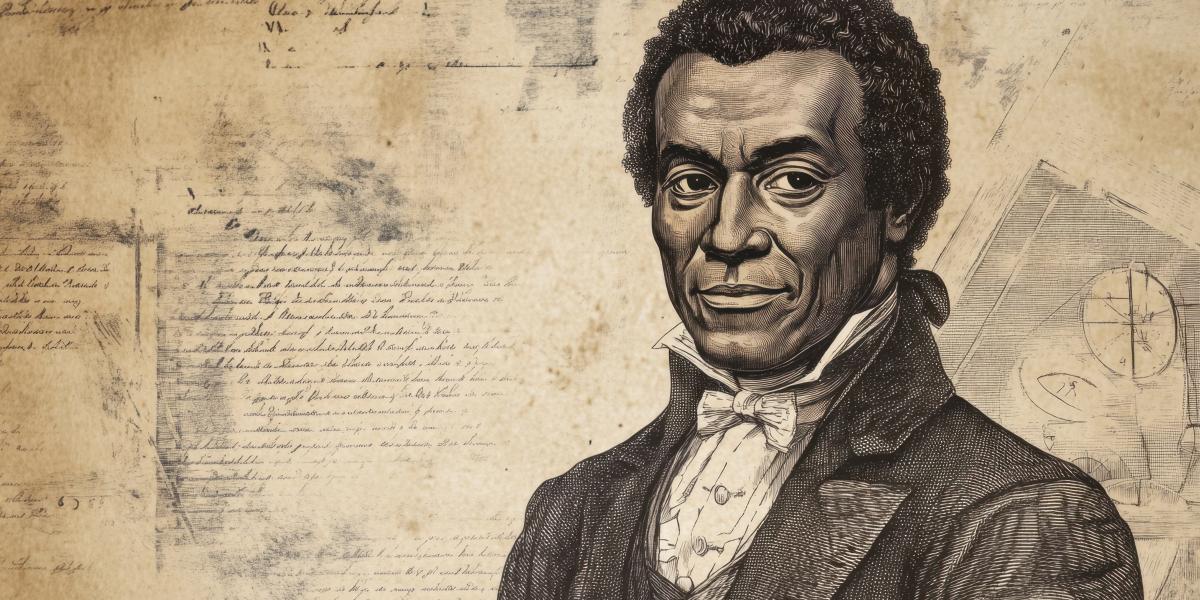
When it comes to any historical study, we always necessarily operate with a limited record. Thus, first-hand primary source documents are key resources. One such key document is The Interesting Narrative of Olaudah Equiano (1789)—an African man, captured as a slave in his youth, who was carried across the Atlantic in the Middle Passage. (If interested, see this 2005 documentary). Due to Equiano’s literacy and the scope of his account, The Interesting Narrative stands as one of the most important first-person primary sources written by a formerly-enslaved African describing slavery and the Middle Passage from the slave’s own perspective.
Interestingly, Equiano provides illustrative information about the prohibitive barriers to obtaining manumission, even when it was legally granted. Equiano finally got permission to purchase his manumission on July 10, 1766. Previously, Equiano was enslaved by Robert King—a merchant who permitted him to work at sea with various captains, enabling him to earn money and eventually purchase his freedom. King agreed that Equiano could purchase his freedom for a fixed sum and permitted him to earn money toward that end while enslaved—an arrangement that King ultimately honored, but his story shows something of the costs and barriers to manumission.
Manumission Restrictions
One obvious question arises whenever discussing slavery: why didn’t slaveholders simply free the slaves? While there were certainly many reasons why this was the case, it should be recognized that governments made laws that restricted manumission—the voluntary freeing of slaves. Simply, the governments involved made it more difficult to legally free slaves.
The nature of human slavery contains a key contradiction—the slave system depends on simultaneously affirming self-ownership for the master and denying it for the slave. Yet property rights are intelligible only if persons are self-owning agents. If the slave is not self-owning, then personhood is not the basis of property. If personhood is not the basis of property, the master has no principled claim to own anything at all.
Further, manumission restrictions—legal restrictions that limited the voluntary freeing of slaves by slaveholders—also contains a contradiction: if one man may legally own another as his property, then he should likewise have the right to disown this property. To deny this right by law involves simultaneously affirming the right of one human to own another as his property but not the right to stop owning another human.
For example, in addition to laws that forbade unlicensed slave meetings, gun control laws against free and enslaved blacks, the death penalty without benefit of clergy for conspiracy, and other laws, the Virginia legislature restricted voluntary manumission—freeing slaves. Murray Rothbard writes in Conceived in Liberty, “Moreover, even voluntary manumission of slaves by masters was restricted by the legislature and approval was required by the governor and the Council.” In other words, people had to get the government’s permission—governor and Council—and usually pay fees to free slaves.
The online Encyclopedia Britannica states that manumission was comparatively difficult in the American South—manumission was even forbidden in South Carolina (1820), Mississippi (1822), Arkansas (1858), and Maryland and Alabama (1860). Another online encyclopedia similarly explains, “On the eve of the Revolution, voluntary manumission was illegal in most of the South, and even where it was permitted, the practice was not common.”
Though many slaveholders would not have taken advantage of the opportunity to free their slaves voluntarily, had the manumission laws been eased, it is reasonable to assume that more slaves would have been freed than otherwise. The late economist Walter E. Williams used to point out that when there is a law restricting something—segregation laws, manumission, minimum wages, etc.—then that must necessarily imply that, absent the legal restriction, more of that restricted activity would occur than otherwise or there would be no need for the restriction.
On such manumission restrictions, historian Jeffrey Rogers Hummel wrote,
One state intervention highlighted by several of these writers was restrictions on slaveholders freeing their own slaves. In many past slave systems, manumitting slaves had been prevalent. Indeed, slaves purchasing their own freedom was common both in ancient and Latin America slavery. But the slave systems of the British West Indies and the southern United States imposed extensive legal barriers to masters freeing their own slaves.
David Brion Davis wrote in the chapter “Slavery” within The Comparative Approach to American History (p. 128; also quoted in Hummel’s work), “only in the Southern United States did legislators try to bar every route to emancipation and deprive masters of their traditional right to free individual slaves.” To give an idea of the effects of such restrictions, Hummel again explains,
The seven states [that outlawed manumission by the time of the Civil War] were Alabama, Arkansas, Florida, Georgia, Maryland, Mississippi, and South Carolina. The roadblocks to manumission of other slave states were less comprehensive but generally still quite effective. Examples include courts overturning wills that freed slaves upon the owner’s death, freed slaves being required to leave the state, or slaveholders having to post exorbitant bonds as high as $1,000 or even the slave’s market value. An 1855 Louisiana law provided that no slave could be freed unless the master provided $150, which would be used to ship the slave back to Africa.
The Mises Institute’s own Mark Thornton argues,
The low rate of private manumissions was not due to a lack of interest, but rather to prohibitions and restrictions on manumission in the slave states. In the absence of these government interventions, a higher rate of manumission could have dramatically increased the size of the free black population and decreased the size of the slave population. An increased free black population would have also undermined the effectiveness of slave hunters and slave patrols. The free black as free worker would have put increased pressure (geographically) on slavery. A decreased slave population and lower slave prices would have increased the likelihood of the enactment of general manumission, especially in the border states.
Just to see the potential of what might have been absent these restrictions, Thornton examines the trends of increasing free black populations in the antebellum United States and the implications had those trends been allowed to continue,
Between the 1790 and 1800 census, the free black population of America increased by over 82 percent and in the South Atlantic states by over 97 percent. Between 1800 and 1810 the free black population in the South Atlantic states increased by over 61 percent. The total free population increased from 8.5 percent to almost 16 percent of the total black population between 1790 and 1810. As states enacted statutes against manumission and immigration, and requiring slave patrols, the growth of the free black population decreased, fell below the rate of growth in the slave population, and was reduced to a trickle in the decade prior to the Civil War.
If the free black population in the South Atlantic states had grown at the same rate between 1800 and 1860 as it did between 1790 and 1800, every slave in the South Atlantic states would have been freed twice by 1860, the equivalent of virtually every slave in the country. Using the slower growth rate between 1790 and 1810 (88 percent), every slave in the region would have been freed 1.5 times. While this is clearly a hypothetical calculation, it does indicate that in the absence of slave codes the slave population would have been a small fraction of its actual size and in a range where general emancipations would have been possible. (emphasis added)
While it is impossible to know how things would have unfolded had a key factor been different, this is a powerful example of Bastiat’s “seen versus unseen.” Had manumission restrictions been removed, it stands to reason that much more human freedom would have been realized. Thornton concludes, “The historical record strongly suggests that the state statutes that prohibited the private manumission of slaves and mandated slave patrols are the reasons why slavery survived as long as it did in the American South.”
Equiano’s Manumission and Its Costs
In 1766, Equiano described his path to freedom, “Every day now brought me nearer my freedom, and I was impatient till we proceeded again to sea, that I might have an opportunity of getting a sum large enough to purchase it.” After some successful voyages, Equiano realized he had earned £47 and consulted his friendly captain, Thomas Farmer, as to how he should approach his master, Robert King, to obtain his freedom. Equiano was encouraged to broach the subject one morning when the captain had breakfast with King, so that Farmer could encourage King to stick to his word. Equiano describes the following scene,
Accordingly, on that morning I went, and met the Captain there, as he had appointed. When I went in I made my obeisance to my master, and with my money in my hand, and many fears in my heart, I prayed him to be as good as his offer to me, when he was pleased to promise me my freedom as soon as I could purchase it. This speech seemed to confound him; he began to recoil: and my heart that instant sunk within me. ‘What,’ said he, ‘give you your freedom? Why, where did you get the money? Have you got forty pounds sterling?’ ‘Yes, sir,’ I answered. ‘How did you get it?’ replied he. I told him, very honestly. The Captain then said he knew I got the money very honestly and with much industry, and that I was particularly careful. On which my master replied, I got money much faster than he did; and said he would not have made me the promise he did if he had thought I should have got money so soon. ‘Come, come,’ said my worthy Captain, clapping my master on the back, ‘Come, Robert,… I think you must let him have his freedom; you have laid your money out very well; you have received good interest for it all this time, and here is now the principal at last. I know Gustavus [Equiano] has earned you more than an hundred a-year, and he will still save you money, as he will not leave you:—Come, Robert, take the money.’ My master then said, he would not be worse than his promise; and, taking the money, told me to go to the Secretary at the Register Office, and get my manumission drawn up. These words of my master were like a voice from heaven to me: in an instant all my trepidation was turned into unutterable bliss; and I most reverently bowed myself with gratitude, unable to express my feelings, but by the overflowing of my eyes, while my true and worthy friend, the Captain, congratulated us both with a peculiar degree of heartfelt pleasure. As soon as the first transports of my joy were over, and that I had expressed my thanks to these my worthy friends in the best manner I was able, I rose with a heart full of affection and reverence, and left the room, in order to obey my master’s joyful mandate of going to the Register Office. (emphasis added)
Equiano discussed how, from his perspective, his “feet scarcely touched the ground” because of his joy at being freed. Yet, he purchased his freedom in 1766 for £40—a sum roughly equivalent to a skilled laborer’s annual income in the eighteenth-century Atlantic world. In addition to this purchase price, he was required to obtain a formal manumission certificate from the Register Office. Although the standard fee was one guinea (21 shillings, or £1 1s), Equiano reports that he was charged half that amount—10 shillings 6 pence (½ guinea). In total, then, Equiano paid £40 + 10s 6d for his freedom.
Adjusted for inflation, £40 10s 6d in 1766 would amount to roughly £7,000–£9,000 today (approximately $9,000–$12,000 USD). Measured in terms of earnings rather than prices, however, the sum represented something closer to a full year’s wages for a skilled laborer—suggesting a modern equivalent in the range of $40,000–$60,000. In modern terms, the manumission document alone—costing a guinea (or half a guinea in Equiano’s case)—would amount to roughly $225–$300 by inflation measures, but closer to $600–$1,900 when compared to eighteenth-century wages, underscoring that even the paperwork of freedom carried a meaningful financial burden.
These costs illustrate how manumission functioned as a significant barrier. To legally free slaves often required substantial capital, formal documentation, and compliance with bureaucratic procedures—obstacles that most enslaved people had little realistic opportunity to overcome and which disincentivized slaveholders freeing their slaves. Imagine how many people remained in human bondage either permanently or longer because manumission was limited, restricted, and costly.