Add Silicon Canals to your Google News feed. 
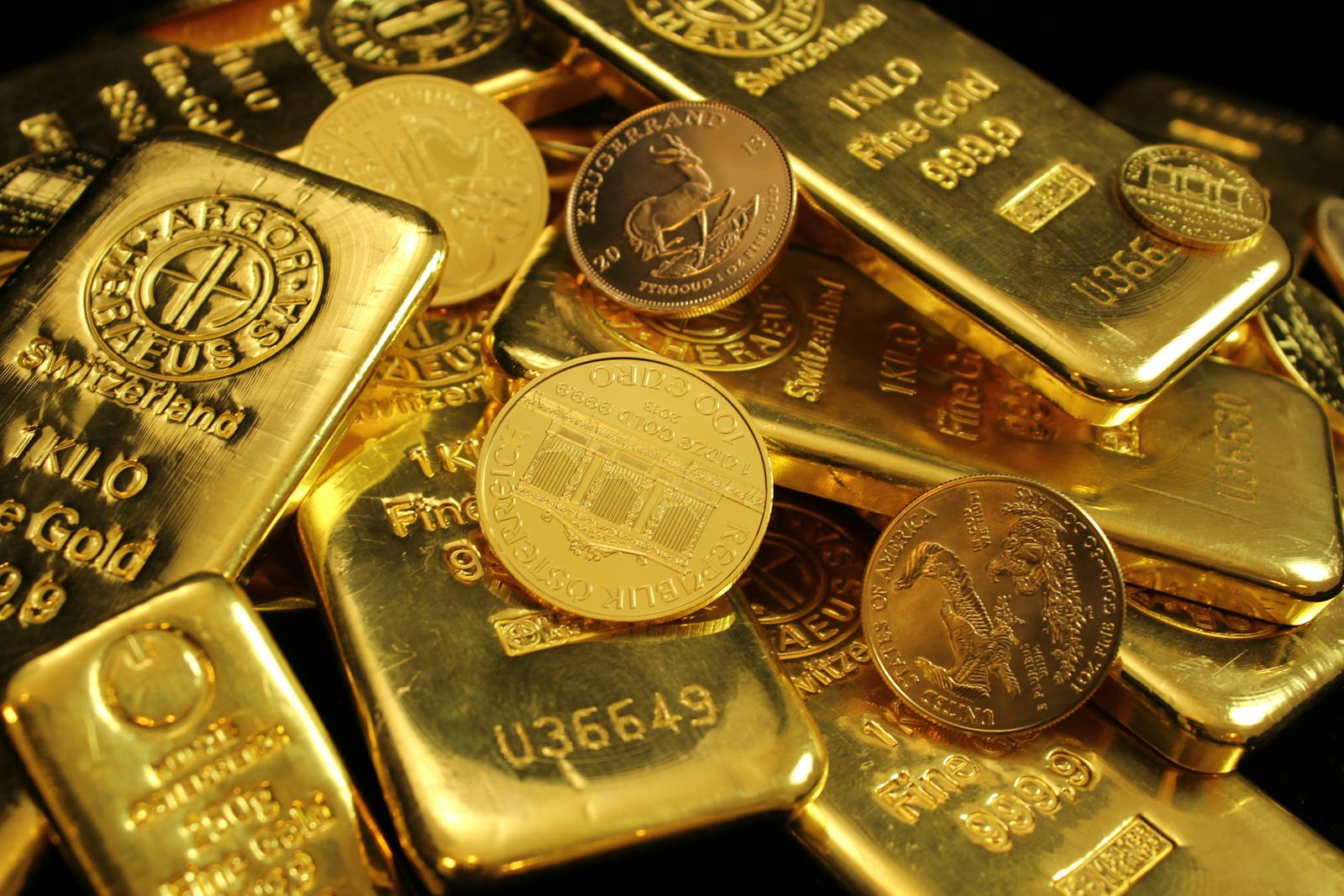
Gold punched through $3,400 an ounce in April 2025. The Federal Reserve, meanwhile, held rates steady and projected calm. If you only read headlines, these two facts seem contradictory. If central banks are signaling stability, why is the oldest fear asset on the planet surging like something is deeply wrong?
The answer lives in a gap between what institutions say and what they do. And that gap, once you learn to read it, tells you more about collective confidence than any press conference ever will.

What central banks say vs. what central banks buy
The World Gold Council’s Q1 2025 data shows that central banks purchased over 290 tonnes of gold in the first three months of the year. That pace, if sustained, would mark the third consecutive year of purchases exceeding 1,000 tonnes annually. China, Poland, India, Turkey, and several unnamed institutions continued aggressive accumulation.
Here’s what makes this psychologically fascinating: most of these same central banks publicly endorse the stability of the current monetary system. Their press releases speak of orderly markets, manageable inflation, and coordinated policy. Then they go buy more gold.
This is the institutional equivalent of someone telling you they feel great about the relationship while quietly moving their belongings into a separate apartment. The words point one direction. The behavior points another.
The psychology of revealed preference
Economists call this “revealed preference,” a concept introduced by Paul Samuelson in 1938. The idea is simple: what people choose tells you more about their actual values than what they claim to value. Surveys lie. Budgets don’t.
Applied to central bank gold buying, the implications are uncomfortable. These institutions operate with access to information, models, and geopolitical intelligence that most market participants will never see. When the People’s Bank of China adds gold for the seventeenth consecutive month, that is a data point with enormous informational density. It means something specific about how Beijing’s most sophisticated financial minds view dollar-denominated reserve assets going forward.
The same logic applies to the National Bank of Poland, which has been one of the most aggressive accumulators in Europe. Poland sits on NATO’s eastern flank. Its central bank doesn’t buy hundreds of tonnes of gold because the outlook feels tranquil.
What this actually means
Central bank gold buying at this scale is a hedge against a future that official communications cannot acknowledge. No central banker can stand at a podium and say, “We believe the global monetary architecture may be entering a period of fragmentation, so we’re reducing our exposure to any single reserve currency.” That statement, spoken aloud, would accelerate the very outcome they’re hedging against.
So they buy gold quietly. And gold’s price, eventually, tells the story they can’t.
The trust thermometer
Gold has no yield. It pays no dividends. It generates no cash flow. Every traditional financial model says it should be worth less when real interest rates are positive, which they currently are. And yet here it sits, at all-time highs, being accumulated by the most sophisticated institutional buyers on the planet.
This only makes sense when you understand gold as a trust thermometer. Its price measures the inverse of institutional confidence in the systems that are supposed to make gold unnecessary: stable currencies, predictable monetary policy, enforceable international agreements, and reserve asset safety.
A research paper published by the Bank for International Settlements in 2023, “Gold, the Dollar, and Reserve Diversification,” documented how central bank gold purchases accelerated sharply after the freezing of Russian foreign exchange reserves in early 2022. The message landed with seismic force in central banking circles: sovereign reserves held in another country’s currency can be weaponized. Gold, held in your own vault, cannot.
That single policy decision reshaped reserve management psychology globally. And we’re watching the consequences compound in real time.
The Middle East factor and geopolitical premium
Growing tensions across the Middle East, including the volatile Iran situation, have added a geopolitical risk premium that gold absorbs like a sponge. Market participants increasingly price gold as insurance against scenarios that feel unlikely on any given Tuesday but catastrophic if they materialize.
This is classic prospect theory at work, the framework developed by Daniel Kahneman and Amos Tversky. People (and institutions) overweight low-probability, high-impact events when making decisions under uncertainty. Central banks, watching growing instability in multiple theaters simultaneously, are behaving exactly as prospect theory predicts: allocating disproportionately to the asset that performs best in tail-risk scenarios.
Iran’s positioning in the Middle East, the reshuffling of trade alliances, and the quiet but persistent dedollarization trend among BRICS-aligned nations all feed into the same calculation. No single factor explains gold at $3,400. The convergence of all of them does.
The cognitive dissonance of “everything is fine”
In my recent piece on invisible cognitive load, I explored how people operate under enormous internal strain while presenting a calm exterior. The parallel to institutional behavior is striking. Central banks are the financial equivalent of someone running on three hours of sleep who insists they’re “fine, just busy.”
The Fed’s language in its April statement was carefully calibrated to project steadiness. Inflation is “somewhat elevated.” The labor market remains “solid.” The committee will continue to monitor “the totality of incoming data.” Every word is chosen to avoid triggering the very instability they’re managing against.
But the gold market functions as a kind of polygraph for institutional calm. You can say whatever you want at the press conference. The buy orders tell the truth.
A study in collective anxiety
A 2024 study published in the Journal of International Money and Finance examined the relationship between geopolitical risk indices and central bank gold purchases across 40 countries from 2010 to 2023. The findings were clear: gold buying correlated more strongly with actual geopolitical events than with any domestic monetary variable, including inflation or interest rates.
Put differently, central banks aren’t buying gold because they think inflation will spike. They’re buying gold because they’re uncertain about the structural integrity of the international financial order itself. That’s a much bigger concern, and a much more revealing one.
What retail investors get wrong
Most individual investors think about gold in terms of price momentum. It’s going up, so they want in. Or it’s at all-time highs, so they fear buying the top. Both reactions miss the point entirely.
The signal from central bank buying is about time horizons that retail investors rarely operate on. When Poland’s central bank accumulates gold, they’re not thinking about the next quarter. They’re positioning for a decade-long shift in how international reserves function. When China adds to its gold holdings month after month, the trade isn’t about the 2025 price chart. It’s about what the global monetary system looks like in 2035.
This mismatch in time horizons creates a persistent misunderstanding. Retail investors look at gold and see a trade. Central banks look at gold and see insurance for a world that may function very differently than the one we’ve known since Bretton Woods.
The growing gap between narrative and reality
There is a growing chasm between official market narratives (soft landing, resilient economy, inflation under control) and the behavioral signals embedded in actual capital flows. Gold at $3,400 is one of those signals. Central bank buying at record pace is another. The quiet accumulation of physical metal by sovereign wealth funds is a third.
As I explored in my piece on emotional households, environments where important things go unsaid develop their own nonverbal communication systems. Everyone learns to read the room because nobody reads it out loud. The global financial system works similarly. The important shifts don’t get announced. They get expressed through positioning, allocation, and accumulation patterns that only become obvious in retrospect.
Gold’s price action is the market reading the room.
What comes next
The honest answer: nobody knows. But the framework for interpreting the signals is clear.
If central bank buying decelerates meaningfully, it suggests that whatever structural anxieties drove the accumulation are easing. If buying continues or accelerates, it means the institutions closest to the levers of the global financial system remain deeply uncertain about the infrastructure those levers are attached to.
Watch what they do. Ignore what they say. This has always been sound advice in psychology, in relationships, and in navigating the rhetoric of powerful institutions. Gold’s price is the scoreboard for that exercise right now.
The Fed says everything is stable. Gold says the people responsible for stability are buying insurance at a pace we’ve never seen before. One of those messages is more honest than the other. And it probably isn’t the one delivered from behind a podium.
Feature image by Zlaťáky.cz on Pexels