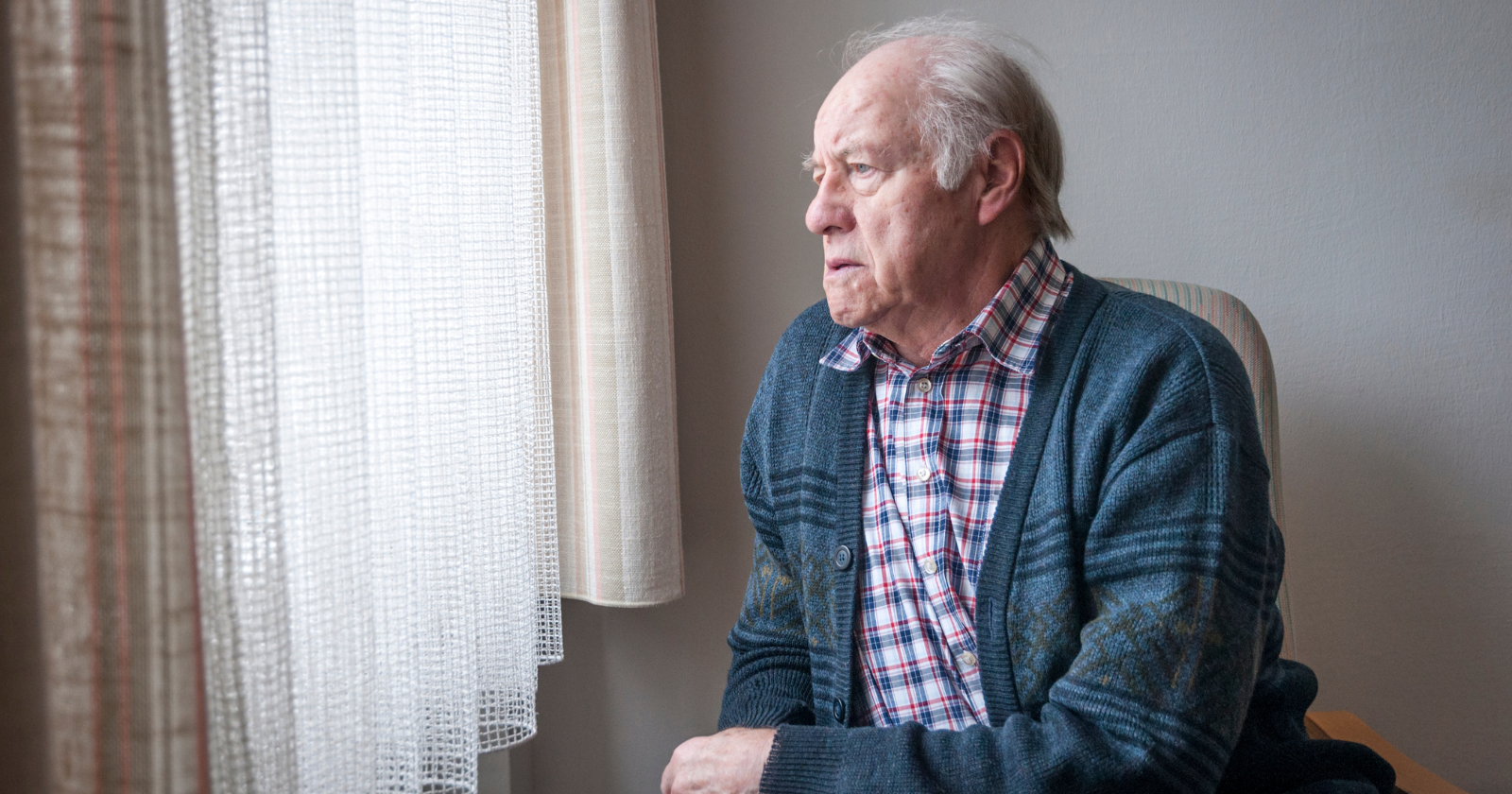
I want to talk about something that I think about often as someone who runs a business, lives abroad, and watches the people in my life navigate their sixties with varying degrees of grace and suffering.
The suffering, when it comes, almost never looks the way you’d expect. It doesn’t look like physical decline, though that’s real. It doesn’t look like cognitive loss, though that happens. It looks like something more insidious: the slow, dawning realization that you’ve stepped off a stage that you didn’t know was holding you up, and that the audience has already moved on.
I’m 37. I’m not there yet. But I’ve watched it happen to enough people I love to know that the hardest part of aging in the modern West isn’t the body. It’s the culture. A culture that has, quietly and systematically, built an equation between productivity and personhood, and then offered no alternative framework for the decades of life that follow the end of productive output.
What the research actually says
A systematic review published in the International Journal of Environmental Research and Public Health examined the relationship between ageism and psychological well-being in adults over 60. The findings confirmed what most older adults already know: ageism is consistently associated with increased stress, anxiety, depression, and lowered life satisfaction.
But the review also identified something more specific and more useful: the mediators. The factors that protected older adults from the psychological impact of ageism weren’t health, wealth, or activity level. They were pride in their age group, optimism about aging, self-confidence in their bodies, and flexibility in setting goals. In other words, the buffer against ageism wasn’t external. It was internal: a sense of self that wasn’t contingent on the culture’s valuation.
This is important because it reveals the real problem. It’s not that older adults lack resources. Many don’t. It’s that the culture provides no framework for self-worth that isn’t tied to output. And when your output drops to zero, as it does for most people at retirement, the culture’s framework says you’re worth zero too. The older adults who thrive are the ones who built an alternative framework. The ones who suffer are the ones who never needed to, because the productivity framework was working fine, right up until the moment it collapsed.
The invisibility problem
A qualitative study on ageism and civic participation across three nationalities (Portuguese, Brazilian, and English) found that older adults who experienced ageism reported frustration, helplessness, perceptions of incompetence, anger, and anxiety. The researchers documented a pattern that goes beyond simple discrimination: older adults described feeling that their age made them invisible, that their contributions were devalued before they were even offered, and that ageist assumptions about their capacity eroded their motivation to participate.
This is the invisibility the title refers to, and it’s not metaphorical. When you walk into a room and people’s eyes slide past you. When your opinion is solicited out of politeness rather than genuine interest. When a younger colleague restates something you just said and receives the credit. When the waiter looks at your adult child instead of you when taking the order. When you speak and people respond to you the way they respond to wallpaper: politely, briefly, and with the immediate intention of moving on.
These are not dramatic injustices. They’re micro-erosions. Each one is trivial. Together, over months and years, they constitute a systematic demolition of social presence. And the demolition follows a specific logic: you are no longer producing, therefore you are no longer relevant, therefore you are no longer seen.
Why grandchildren and hobbies don’t fix it
The standard prescription for the emptiness of post-productive life is to fill the calendar. Get hobbies. Spend time with grandchildren. Volunteer. Travel. Stay busy. Stay active. Stay relevant.
I’ve watched people follow this prescription faithfully and still suffer. And I think the reason is that the prescription misdiagnoses the problem. The problem isn’t a lack of activity. It’s a lack of being taken seriously. A lack of mattering in the way you used to matter when you were embedded in economic and social systems that treated your presence as consequential.
Grandchildren are wonderful. But being a grandparent is a support role. It doesn’t carry the social weight of being a professional, a provider, a person whose daily decisions have measurable consequences. Hobbies are fulfilling. But a hobby is, by definition, something that doesn’t matter to anyone except you. Volunteering is meaningful. But it’s also, in many contexts, a form of productivity-lite, an unpaid simulation of the real thing, which the culture silently categorizes as less valuable than the paid version.
None of these activities address the core wound, which is this: the culture taught you, over decades of participation, that your value was your output. And now that your output has stopped, the culture has no mechanism for telling you that you still matter. The grandchildren and hobbies are distractions from the wound, not treatments for it.
The cultural failure
Compare this to cultures with different value structures. In societies influenced by Confucian values, aging is associated with increasing wisdom and social respect. Elders don’t exit the social hierarchy when they stop working. They ascend it. In many Indigenous cultures, elders hold formal roles as advisors, storytellers, and keepers of community memory. Their social status doesn’t diminish with age. It deepens.
These aren’t idealized fantasies. They’re alternative frameworks. They’re evidence that the equation between productivity and worth is culturally constructed, not biologically inevitable. Other cultures looked at the same biological reality of aging and built entirely different social structures around it. Structures that provide dignity, visibility, and relevance to people who have stopped producing economic value.
The modern West chose a different path. It built an economy that needs young workers and a culture that celebrates youth, and it created no compensating structure for the people who age out of both. The result is a growing population of people in their sixties, seventies, and eighties who are physically healthy, mentally capable, and socially invisible. People who have thirty years of accumulated wisdom and no cultural mechanism for deploying it. People who could contribute enormously and are met with the assumption that their contribution window has closed.
What Buddhism taught me about this
There’s a concept in Buddhist philosophy that I think about when I consider this problem. It’s the idea that suffering arises not from circumstances themselves but from the stories we tell about our circumstances. The circumstance here is aging. The story is: aging means declining value. And the story is culturally constructed, not inherently true.
Buddhism doesn’t measure a person’s worth by their output. It measures it by their awareness, their compassion, their capacity to be present. In the Buddhist framework, the person who sits quietly and observes the world with clarity is not less valuable than the person who runs a company. They may, in fact, be more valuable, because the awareness they’ve cultivated is the rarest and most difficult human achievement.
I don’t say this to romanticize aging. Aging involves real losses that no philosophical framework can eliminate. But I say it because the specific suffering described in this article, the suffering of invisibility, the suffering of being told your worth expired with your career, is not a necessary feature of aging. It’s a feature of the culture. And cultures can change.
The work of changing it starts with recognizing the equation for what it is: a story. A powerful, pervasive, deeply internalized story, but a story nonetheless. Your worth did not expire when your career did. Your relevance did not end when your paycheck did. Your visibility is not contingent on your productivity. The culture says otherwise. The culture is wrong.