Until the Industrial Revolution came along, communities could only grow and thrive if they first managed to push agricultural productivity well beyond bare subsistence. Italy’s late-medieval and Renaissance ascent—from 1250 to the mid-16th century—demonstrates how a functioning rural economy could break the cycle of the chronic poverty that had shackled mankind for millennia.
For three full centuries the communes of central and northern Italy turned themselves into Europe’s greatest commercial hubs. Wool and silk workshops, goldsmiths, armorers, and bustling trade fairs sprang up at a relentless pace, propelled by an exploding credit sector. However, none of this urban efflorescence would have been remotely possible without the countryside doing its part—and more than its part. Italian farmers delivered steady surpluses of food, raw materials (especially wool and dyestuffs), and marketable grain that fed the cities, clothed their workers, and freed labor for the looms, forges, and counting houses.
Nature’s Gift: The Po Valley Advantage
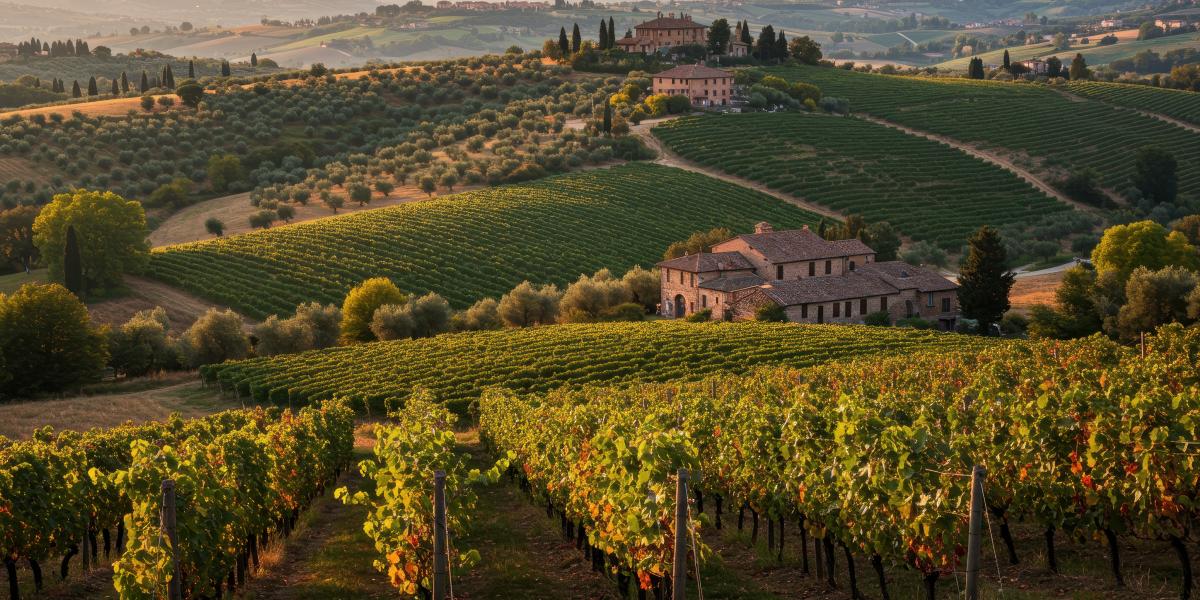
Northern Italy’s agricultural powerhouse was the Po Valley—a vast, crescent-shaped alluvial plain covering 17,760 mi² and stretching from the Alpine foothills of Piedmont to the clay lowlands of Friuli. Every year the Po and its countless tributaries flooded, dumping fresh silt and nutrients across the fields and keeping the soil among the deepest and richest in Europe.
Modern studies back up what medieval farmers already understood: the valley’s soils were naturally higher in nitrogen than most of France or Germany. Wheat yields routinely hit 6-to-1 or even 8-to-1 in the irrigated zones of Lombardy and Emilia—about double the miserable 3-to-1 or 4-to-1 that northern European peasants had to settle for in the same centuries. Yet the political power’s insatiable greed was poised to squander that bounty.
Plundered from Without, Devoured from Within: Italy’s Double Collapse
From the late 15th century through the first half of the 16th, Italy was ravaged by a long series of conflicts known as the Italian Wars (1494-1559). Foreign armies treated the free Italian cities as little more than loot to be plundered and ridden over—as Niccolò Machiavelli wrote in Chapter XII of The Prince when he described Italy as “predata e corsa.”
Shifting alliances, pitched battles, and sudden reversals of fortune eventually handed dominance to the Habsburg empire at France’s expense. The result was a general impoverishment of the Italian peninsula. When the dust finally settled, the once-proud independent republics of the north—the city-states whose traditions of self-government, administrative decentralization, and civic liberty had powered their economic rise—fell under Habsburg rule like the rest of Italy.
But even before Europe’s monarchs could sink their hegemonic claws into a bleeding Italy, the growing rapacity of the local institutions was sounding the first notes of decay from within. Brescia’s hinterland offers a perfect case in point. Far from the romantic image of an eternally-open and dynamic Venice, the region remained yoked to the Republic’s corporatist policies—only in its dying decades did the Serenissima finally relent, embracing economic liberalization and supporting the rising entrepreneurial forces in the provinces.
Throughout the 15th century, Venetian territories saw a systematic transfer of peasant land into the hands of urban patricians. Entire rural communities were stripped bare; their holdings re-registered under the lagoon oligarchy in the Venetian cadastre. The economic fallout from this massive takeover is documented in a report that Brescia’s rectors sent to Venice’s chief magistrate on February 15, 1461.
The officials were asked to explain what had happened to the countryside between the 1430 cadastre and the new one of 1460. The answer was grim: as peasants lost ownership, direct smallholding vanished. In its place spread sharecropping (mezzadria) and the biolchi system—an old regional measure equal to the area one pair of oxen could plow in a single day. What had once been smallholders became sharecroppers or day-laborers, all thanks to a quiet, perfectly legal expropriation carried out in the name of “fiscal efficiency.”
Out of Brescia’s fruitful, but long-starved, land came a man determined to transform “red, stubborn earth from a cruel stepmother into the mother of progress and civilization”—Camillo Tarello.
A 16th-Century Libertarian in the Flesh
A native of Lonato del Garda (born between 1513 and 1523), Tarello grew up in a modest family. The surviving records paint a picture of a fiery, combative man who spent his life in and out of court—“civil suits, appeals, arbitrations, criminal trials, petitions to every magistrate who would listen.” On July 16, 1540, he was hauled before the Council of Ten and walked away with a full acquittal, almost certainly on a tax-default charge. Tarello’s ungovernable temper and distrust of bureaucrats suggest he was a libertarian before the word even existed.
Tarello eventually acquired a farm called Marcina near the River Chiese, in the village of Gavardo. That land became his lifelong home and his open-air laboratory. Every insight he gained there—through decades of trial, error, and constant experimentation—flowed into his one and only known work: Ricordo d’agricoltura (Memoir on Agriculture), first printed in Venice in 1567.
The Revolutionary Discovery Venice Ignored
The Memoir on Agriculture set out to raise wheat production in a region still locked into subsistence farming. Although the 16th century brought rapid population growth, the countryside stayed stubbornly stagnant—a paradox of booming numbers amid grinding socio-economic disorder. Tarello’s solution was to boost yields through a carefully-planned, long-term crop rotation that made full use of the soil-restoring power of forage legumes.
To that end, he proposed inserting two full years of clover and other legumes into the traditional four-year cycle. These plants fix atmospheric nitrogen, which is then converted into mineral salts and, through nitrification, into the nitrates that wheat needs to thrive. More forage also meant more livestock and far more manure to spread on the remaining wheat fields. The payoff: dramatically higher grain harvests from the exact same acreage.
Nevertheless, Tarello was plainly at odds with the Venetian elite: scholars and aristocrats dismissed him outright, branding his methods as “bizarre and outlandish.” The failure to adopt Tarello’s system was due to a severe shortage of capital. Moving from continuous cereal cropping to an alternating grain-and-forage rotation required substantial funds—both to purchase the additional livestock and to bridge the inevitable income gap during the transition years. In a countryside drained by crop-share and feudal rents, such resources were simply unavailable.
The Father of Modern Agriculture
Camillo Tarello was far more than an experimenter and a shrewd observer of nature. He was also a self-taught man who combined the knowledge of Virgil’s Georgics and Columella’s De Re Rustica with a proto-capitalist, entrepreneurial mindset. In the opening pages of his treatise, he proudly likened himself to Christopher Columbus for the revolutionary ideas he was bringing to light.
Literary polish was hardly his strength. The Ricordo is poorly organized, sometimes downright heavy and careless in style. Rough prose aside, its importance is undisputed. The earliest historians of agronomy never hesitated to place Tarello among the discipline’s foremost pioneers.
One of the most striking tributes comes from the Swiss agronomist Heinrich Grüner. In the 1761 Memoirs of the Bernese Economic Society, he wrote with unusual frankness:
It is astonishing that Tarello’s modest little book already contains the most important discoveries of modern agriculture—discoveries we proudly claim as our own, forgetting how much easier it is to refine an existing invention than to make the original leap.
A century later the Ticinese professor Angelo Monà, in his English Agriculture Compared with Italian (1870), pointed out:
The English themselves acknowledge that they owe the theory of crop rotation—with the regular alternation of grain and temporary forage crops—to our own Tarello of Lonato. The introduction of clover and the shift from three-field to four-course rotation stemmed largely from his precepts, which marked the decisive first step toward the regeneration of northern agriculture.
In Italy, Camillo Tarello faded into obscurity. Abroad, his Ricordo was promptly translated, eagerly read, and widely put into practice. Its greatest influence was felt in Britain during the 18th century’s Agricultural Revolution, where it shaped the theories of Arthur Young and Jethro Tull—the inventor of the seed drill—and supplied the essential foundation for the celebrated Norfolk four-course system. Tarello’s story is the familiar tragedy of a home-grown genius neglected by his own countrymen, only to change the course of world agriculture from afar.