Add Silicon Canals to your Google News feed. 
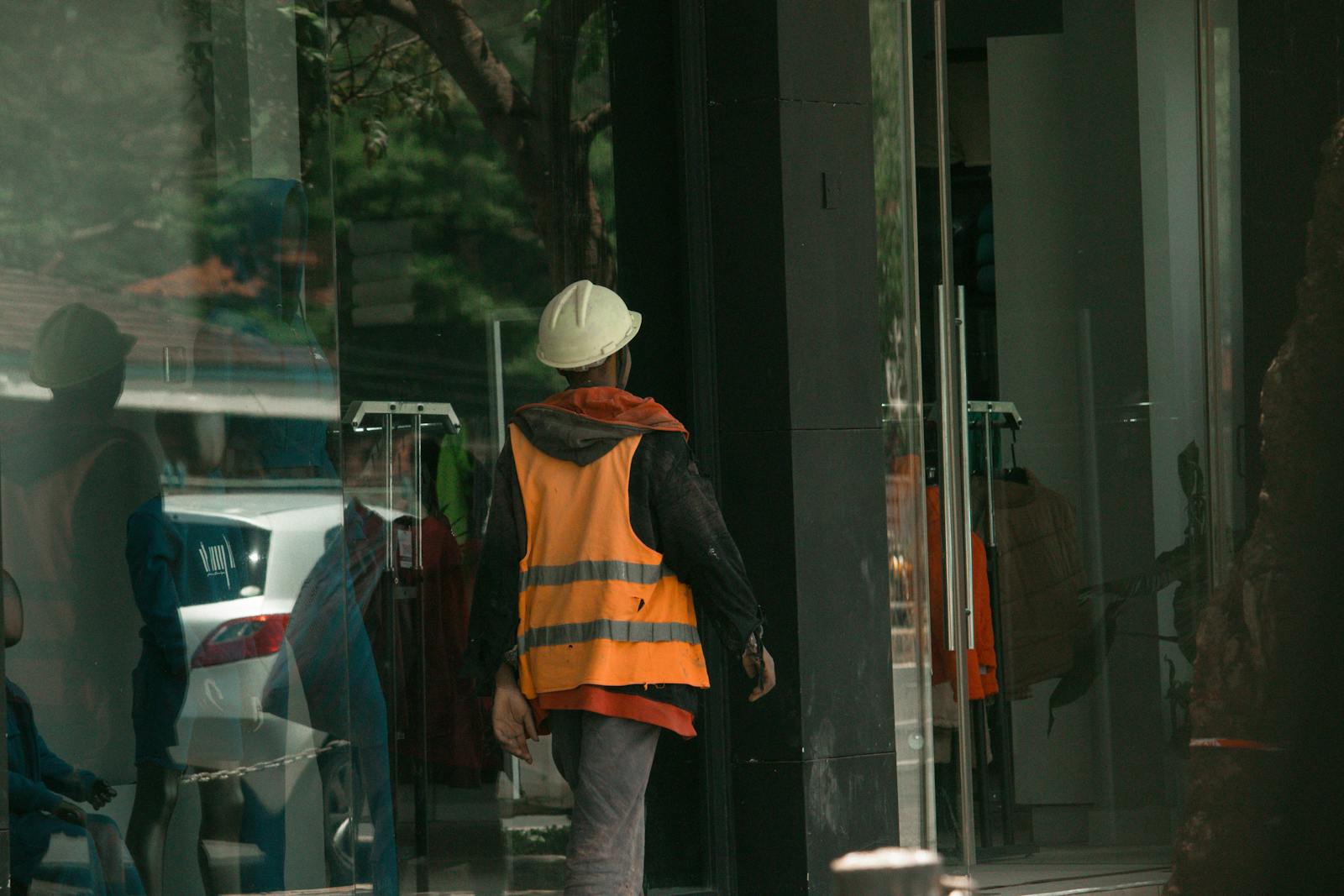
I need to tell you about a woman named Grace. That’s the name she asked me to use. She works in a building in Nairobi’s Upperhill district, on the fourth floor of an office complex that from the outside looks like any other BPO hub. Inside, she spends eight hours a day reviewing content that social media users have flagged. She watches videos of sexual abuse, animal cruelty, political executions, self-harm, and every conceivable form of human degradation, so that when you open your Instagram feed or your TikTok algorithm, you get dance trends and cooking tutorials instead of atrocity footage.
Grace earns roughly 30,000 Kenyan shillings a month. That’s about $230 USD. The AI model she helps train, the one that learns from her thousands of daily labeling decisions about what counts as “violating” versus “borderline” versus “acceptable,” generates billions of dollars in value for a company headquartered 15,000 kilometers away in California.
I spent the better part of the past year reporting on content moderation workforces in Nairobi and Manila. I talked to dozens of workers, former workers, managers, psychologists, and labor organizers. I visited facilities when I could and, more often, met people in coffee shops and churches and over WhatsApp calls at odd hours. What I found confirmed something I’ve been circling in my writing for a while now: the story of making AI “safe” is fundamentally a story about class, about which humans absorb the costs so that other humans never have to think about them.
<
The supply chain nobody maps
We talk a lot about AI supply chains in terms of data centers, GPU chips, energy consumption, rare earth minerals. These are real and important. But there’s another supply chain, a human one, that runs through specific neighborhoods in specific cities in the Global South. Nairobi. Manila. Bogotá. Hyderabad. These are the places where the psychological waste of the internet gets processed.
The structure works like this: a major tech company (Meta, OpenAI, TikTok, Google) contracts a Business Process Outsourcing firm (Sama, Majorel, Teleperformance, Accenture) to handle content moderation and data labeling. The BPO firm sets up operations in a country where English proficiency is high and labor costs are low. Workers are hired on short-term contracts, often through sub-contractors, creating layers of legal insulation between the person watching a beheading video and the corporation whose product required it.
A 2023 investigation by TIME magazine revealed that OpenAI paid Sama workers in Kenya less than $2 per hour to label toxic content used to train ChatGPT’s safety filters. Sama has since exited that particular contract, but the structural dynamic hasn’t changed. It has scaled. As generative AI expands and the demand for Reinforcement Learning from Human Feedback (RLHF) grows, the need for human labelers and moderators has exploded. The International Labour Organization’s 2024 report on platform labor estimates that content moderation and data annotation now employ over 150,000 workers in Sub-Saharan Africa alone, with similar numbers across Southeast Asia.
In my recent piece on how the Global South is being surveilled into compliance under the banner of development, I focused on digital infrastructure imposed from above. Content moderation is the inverse angle of the same dynamic: human labor extracted from below, metabolized into the appearance of technological sophistication.
What the work actually looks like
Let me be concrete, because abstraction is how these systems hide.
A moderator in Manila I’ll call David described his typical shift. He logs into a proprietary platform. A queue of content appears: images, videos, text posts. Each one has been flagged by an automated system or a user report. His job is to categorize it according to detailed policy guidelines that run to hundreds of pages. Is this image “graphic violence” or “newsworthy violence”? Is this video of a teenager cutting herself “self-harm promotion” or “self-harm awareness”? Is this political speech “hate speech” or “protected political expression”?
He has, on average, about 30 to 50 seconds per item. He makes between 800 and 1,200 decisions per shift. The metrics are tracked in real-time: accuracy rate, throughput speed, consistency scores. Fall below the benchmarks and you’re flagged. Get flagged too many times and your contract isn’t renewed. There is no tenure. There is no union. There are, in some facilities, “wellness rooms” with beanbags and dim lighting where workers can go for 15-minute breaks after particularly disturbing content.
David told me he developed insomnia within three months. He started seeing flashes of content when he closed his eyes. He was offered access to a counseling app. The counseling app had a chatbot as its first point of contact.
I want to sit with the poetry of that for a moment. The human being who is psychologically damaged by the process of making AI safe is then offered an AI system as therapy.
The class architecture
This is where I need to name the dynamic directly, because the discourse around AI safety almost always avoids it.
The people who build AI systems, who write the research papers, who give the TED talks, who collect the equity compensation, live in San Francisco, London, and New York. They earn six or seven figures. They debate the philosophical implications of alignment and existential risk at conferences with catered lunches. Many of them are genuinely thoughtful people who care about getting this technology right.
The people who perform the foundational labor of making those AI systems less toxic, who do the actual empirical work of teaching a model the boundary between acceptable and unacceptable, live in cities where $230 a month is a living wage only if you share a room with two other people and eat mostly ugali and sukuma wiki. They have no equity. They have no voice in the design decisions. They are, by contractual design, invisible.
This is a class system. It operates through geography, through outsourcing layers, through NDAs, through the very language we use (“AI safety” centers the technology; “human trafficking in traumatic labor” would center the workers). And it is not an accident or an oversight. It is an architecture, deliberately constructed to keep costs low and liability diffuse.
I explored a version of this architecture when I traced the infrastructure that makes upward mobility feel impossible. The mechanisms are different in content moderation, but the logic is identical: systems that extract maximum value from human beings while structurally preventing those humans from accumulating any leverage.
The psychological externality
Researchers at the University of Oxford’s Internet Institute and the Distributed AI Research Institute (DAIR) have been documenting the mental health impacts of content moderation for years. The findings are consistent and grim. Workers report PTSD symptoms at rates comparable to combat veterans and first responders. They experience secondary traumatic stress, desensitization, hypervigilance, substance abuse, and relationship breakdown.
Dr. Sarah T. Roberts, author of Behind the Screen: Content Moderation in the Shadows of Social Media, calls content moderation “the most consequential labor issue in the technology industry that almost nobody discusses.” Her research, spanning nearly a decade, documents how the industry has systematically treated psychological harm as an individual wellness issue rather than a structural labor condition.
In Nairobi, I met a former Sama employee who told me that the company had improved conditions after the TIME exposé: higher pay, better mental health support, shorter exposure windows. I believe him, and it matters. But he also pointed out that when Sama raised its prices, some contracts simply moved to other providers. The market finds the cheapest willing human. That dynamic doesn’t change because one company has a crisis of conscience.
In Manila, Teleperformance workers I spoke with described a more professionalized environment (air conditioning, ergonomic chairs, regular check-ins with counselors) but also relentless productivity metrics that made the counseling sessions feel performative. You can’t process trauma in a 15-minute slot between queues of child exploitation material.
Why the AI safety conversation ignores this
The mainstream AI safety discourse has been dominated by two poles: the existential risk camp (worried about superintelligence ending humanity) and the bias/fairness camp (worried about discriminatory outputs). Both are legitimate concerns. But both are focused on the product, the model, the output. Almost nobody in the AI safety conversation is talking about the production process itself as a site of harm.
This is telling. When we talk about “alignment,” we mean aligning the AI with human values. Whose humans? Whose values? The worker in Nairobi who labels content all day has values too, values about dignity, about fair compensation, about not having to watch a child be assaulted on a Tuesday morning so that a chatbot can learn to decline a request politely. Those values aren’t part of the alignment conversation.
The reason is structural. The AI safety conversation is held among people with power: researchers, executives, policymakers. Content moderators have no seat at that table. They are bound by NDAs. They are classified as contractors. Many of them fear deportation or blacklisting if they speak publicly. The conversation about safety excludes the people most harmed by the process of achieving it.
My own position in this
I’m not writing from a position of purity here. I use the platforms these workers moderate. I use AI tools that were trained using their labor. I run a media company from Singapore, a city that has its own complicated relationship with outsourced labor and invisible workforces. I’ve benefited from the same global class structures I’m describing.
But I think that’s exactly why this story matters. The genius of this system is that it makes everyone complicit while making almost no one responsible. The tech company says it’s the BPO’s responsibility. The BPO says it follows all local labor laws. The local government says it’s grateful for the jobs. The consumer never knows. The investor doesn’t ask.
When I wrote about Silicon Valley building a religion around disruption while ensuring nothing fundamental changes, I was tracking how the industry maintains ideological cover for extractive practices. Content moderation is perhaps the purest example. The language of “safety” and “responsibility” and “ethical AI” provides a moral sheen to a system that operates on the psychological exploitation of workers who have few other options.
What would change look like?
I don’t want to end with a tidy policy prescription, because the tidiness would be dishonest. But some directions are clear.
First, transparency. Every major AI company should be required to disclose its full content moderation and data labeling supply chain, including subcontractors, pay rates, working conditions, and mental health outcomes. The EU’s Digital Services Act has moved in this direction, but enforcement remains weak and the requirements don’t extend to the training pipeline for generative AI models.
Second, direct employment. The subcontracting model exists specifically to externalize costs and insulate liability. If a company’s product depends on human labeling, those humans should be employees of that company, with the benefits, protections, and bargaining power that entails.
Third, worker voice. Content moderators should be included in AI governance conversations, in ethics board deliberations, in the design of the policies they enforce. A 2024 report by the Partnership on AI found that moderator feedback was systematically excluded from policy revision processes at most major platforms.
Fourth, and most fundamentally, we need to stop treating the psychological cost of content moderation as a wellness problem and start treating it as what it is: an occupational hazard created by a business model, no different from black lung disease in coal mining or repetitive strain injury in manufacturing. It demands regulation, compensation, and structural prevention.
Grace, the woman I mentioned at the beginning, told me something during our last conversation that I haven’t been able to shake. She said: “They tell us we are keeping the internet safe. But who keeps us safe?”
I didn’t have an answer. The honest truth is that, right now, nobody does. And the system works precisely because of that.
Feature image by MART PRODUCTION on Pexels