Add Silicon Canals to your Google News feed. 
The first Saturday after she moved out, I woke at 7 AM like always. Made coffee. Sat at the kitchen table. And then it hit me—that peculiar quality of silence that fills a space when someone who’s supposed to be there isn’t.
Not the temporary quiet of a partner who’s gone to the shops or visiting friends. This was architectural silence, built into the very walls of my flat. The kind that makes you realize the background hum of another person’s existence—the shower running upstairs, the kettle clicking on, the sound of pages turning—wasn’t coming back.
I’d been divorced for exactly three weeks, and everyone kept asking about the wrong things. How’s the paperwork going? Who got the flat? Are you dating yet? Nobody asked about the silence. Nobody warned me that learning to live alone again at 38 would feel like learning a new language, one where all the conversations happen inside your own head.
The myth of the dramatic divorce
When most people think about divorce, they picture screaming matches, thrown plates, dramatic confrontations. Mine wasn’t like that.
After eight years together, we sat down one evening and admitted what we’d both been thinking—we’d become different people. Not bad people, not enemies, just different. The person I’d married at 30 wanted the same things I did. By 38, we were living parallel lives that rarely intersected except at dinner.
The amicable nature of it all made it harder in some ways. There was no villain to rage against, no betrayal to process. Just two people who’d grown in different directions, like trees planted too close together, each bending away to find their own light.
I remember reading somewhere that the opposite of love isn’t hate—it’s indifference. When you realize you’ve been fully present at work but coasting through your personal life for years, that hits differently. The divorce papers were just acknowledging what had already happened.
Facing the person in the mirror
Here’s what nobody tells you about suddenly living alone after years of partnership: you can’t hide from yourself anymore. When there’s no one else to blame for the dishes in the sink, no one else’s schedule to work around, no one else’s preferences to consider, you’re left with just you. And if you haven’t really looked at yourself in years, that’s terrifying.
I started therapy about a month after the divorce. Not because I was falling apart—I was functioning fine, getting to work, maintaining friendships. I went because I realized I had no idea who I was when I wasn’t part of a ‘we.’
My therapist asked me a simple question in our second session: “What do you want?” I sat there for what felt like hours (probably thirty seconds) and couldn’t answer. I knew what I didn’t want. I knew what I should want. But what I actually wanted? No clue.
The therapy helped more than I expected. Not in the way I thought it would—I wasn’t looking for someone to tell me everything would be okay. Instead, it gave me tools to sit with discomfort, to examine patterns I’d been running on autopilot for years.
Rediscovering rituals
Living alone means you have to actively create structure. No one else’s morning routine to sync with, no default dinner time because someone else gets hungry at seven. You have to decide, consciously, how to fill your days.
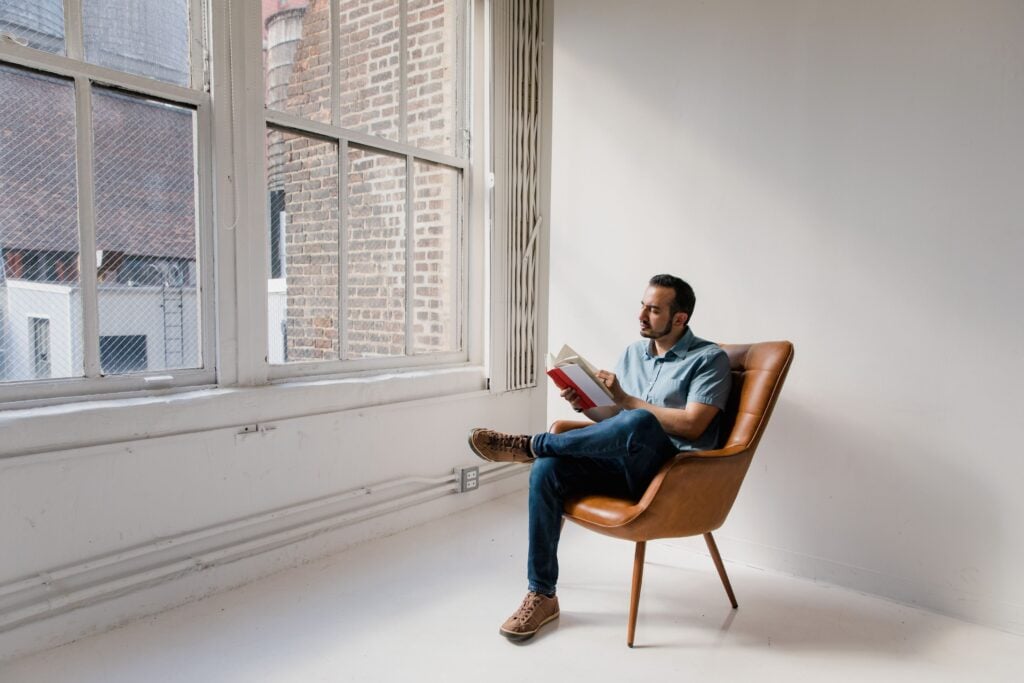
I started small. Reading before bed became sacred—not scrolling through my phone, but actual books. I deliberately choose things unrelated to current events, usually history or psychology. There’s something grounding about reading about people who lived centuries ago and realizing they struggled with the same fundamental questions we do now.
Mornings became mine in a way they never were before. I could have coffee in complete silence without feeling antisocial. I could go for a run at 6 AM or sleep until 9 on weekends without negotiating or explaining.
But here’s the thing about rituals—they only work if they mean something to you. I tried meditation because everyone said it would help. Lasted three days. Tried journaling. Two weeks. What stuck was what felt authentic, not what looked good on paper.
Learning to be alone without being lonely
There’s a massive difference between being alone and being lonely, but it took me months to understand that. The first few weekends were brutal. Saturdays stretched out like blank pages I didn’t know how to fill. Sundays felt like everyone else in London was paired up, having brunch, living their coupled lives while I wandered Tesco trying to figure out how to shop for one.
But slowly, something shifted. I started to notice the freedom in it. Want to spend Saturday reading an entire book? Go ahead. Feel like taking a spontaneous trip? No coordination required. The silence that felt oppressive started to feel spacious.
I began to appreciate my own company in a way I never had before. Not in a forced, “I’m so independent” way, but genuinely enjoying the person I was becoming when I wasn’t trying to be half of something else.
The unexpected gifts
Divorce at 38 gave me something I didn’t expect—a second chance at building a life intentionally. When you’re young, you make decisions based on who you think you’ll become. By your late thirties, you know who you are. The gap between those two versions of yourself is where growth happens.
I discovered I actually like cooking, something I’d never bothered with when sharing meal duties. I found out I’m more introverted than I thought—I’d been using the relationship as a buffer against social obligations I didn’t actually want.
Most surprisingly, I became better at work. Not because I was throwing myself into it to avoid dealing with emotions, but because I was more present everywhere. When you stop going through the motions in one area of your life, it affects everything else.
The bottom line
Sitting in that quiet flat on Saturday mornings doesn’t feel oppressive anymore. The silence has become familiar, even comfortable. It’s not the architecture of loneliness—it’s the foundation of self-knowledge.
Would I recommend divorce? Of course not. But I would recommend the honest self-examination that sometimes only comes from having your life completely rearranged. I would recommend learning to sit with discomfort instead of immediately trying to fill it with noise, people, or activity.
The hardest part wasn’t losing the relationship. It wasn’t the paperwork, the division of belongings, or explaining to friends and family. The hardest part was accepting that the silence wasn’t something to be fixed or filled—it was something to be lived in, understood, and eventually, appreciated.
Some mornings I still wake up and the quiet feels heavy. But most days, it feels like possibility. Like space to become whoever I’m supposed to be at 40, 45, 50. The silence isn’t empty anymore. It’s full of potential.